
UNITED KINGDOM · CAFÉ COSTING
UK café menu pricing: understand costs, margins and delivery without getting lost
A café can sell plenty of coffee and still struggle to pay its bills. This guide starts with one item, shows how the money changes between the counter and delivery, and builds a practical weekly review. You do not need to know accounting language first. Every example is invented, with the costs and limits written beside the result.
Choose a section in this guide
Start with one item customers actually buy
Choose a regular seller, such as a sandwich, bowl or baked item, rather than the most complicated special. Describe the portion and the customer promise. List every ingredient used, including sauce, butter, garnish and a prepared filling. Record the pack price, amount bought, usable amount after preparation and amount used in one serving. Do not treat the whole invoice as the cost of one item or assume that all purchased food reaches the customer.
Suppose an invented filling batch costs £18 and produces twelve usable sandwich portions. Filling cost is £1.50 per portion. Bread costs £0.60, sauce and garnish £0.20, and other defined ingredients £0.20. The ingredient cost is £2.50. A takeaway pack costs £0.30, making the ingredient-and-pack subtotal £2.80. These numbers are not typical café benchmarks. They make the recipe method visible so you can replace them with your own prices.
Now record the revenue basis. The price on the menu may include VAT where applicable, but the operating worksheet should use a clearly explained sales amount consistent with your accounts. Do not decide the tax treatment by reading this sandwich example; actual classification depends on the supply and business circumstances. Keep the price paid, applicable tax and restaurant-owned sales as separate lines when needed. Ask your bookkeeper to confirm the basis before using the model for a menu-wide decision.
Put the date of the recipe and supplier prices at the top of the card. If a pack changes size, update the conversion even if the invoice total stays the same. If the preparation yield changes, investigate why. A price rise, smaller pack and poorer yield all increase portion cost through different routes. Finding the route helps you choose between a supplier conversation, recipe adjustment and selling-price review.
Keep quality and safety outside the negotiation with the spreadsheet
A portion should be repeatable and honestly described. Reducing it without changing the promise is not a sound costing strategy. Neither is using unsafe leftovers or ignoring allergen differences in a substitute ingredient. The model helps you see the cost of delivering the agreed product safely. If that cost is too high for the expected selling price, redesign the product or business decision openly instead of hiding the problem in the kitchen.
Markup is not margin: a small example with a big consequence
Imagine an item costs £3 at the cost stage you are measuring and sells for £4.50 on the matching revenue basis. The difference is £1.50. Markup divides the difference by cost: £1.50 divided by £3 is 50%. Margin divides the difference by sales: £1.50 divided by £4.50 is about 33.3%. The pounds left are the same, but the percentage answers a different question.
If you wanted a 50% margin at that same cost stage, the price calculation would be £3 divided by 0.5, which is £6. This is not a recommendation that your café should charge £6. It explains why multiplying cost by 1.5 does not create a 50% margin. The customer promise, local demand, channel charges and other costs still determine whether a price is sensible.
Write the denominator beside the percentage in your sheet. “Margin after ingredients” is different from “margin after ingredients, packaging and payment fees.” Neither is automatically net profit after rent and staff. If you compare two items with different cost definitions, the better percentage can be a recording illusion. Use the same stage, then show the remaining period costs separately.
The distinction between the two calculations is described by Business Victoria. The pound example is original and uses no restaurant performance data.
Why a more expensive item can contribute more money
An invented snack has £1 of ingredients and £3 of defined sales, leaving £2 before other costs. A lunch item has £3.50 of ingredients and £8 of defined sales, leaving £4.50. The snack has the lower ingredient percentage, but the lunch adds more pounds at that stage. Compare how often they sell and how much preparation each needs. A percentage alone cannot show which item helps pay the café's bills.
Do not make a menu decision from one cost stage alone. Add packing, order-specific services and any funded offer for the relevant route. Then examine demand and the busy station. A high-contribution item that needs equipment already full at lunch can limit other sales. An item with lower contribution but fast preparation may be useful in a bundle or quiet period. Keep the decision practical rather than ranking the entire café by one ratio.
VAT: ask the right classification question before pricing
VAT is a tax on supplies under the applicable rules. Do not apply one blanket treatment to every café sale. HMRC's catering and takeaway guidance distinguishes on-premises consumption, hot takeaway tests and other food supplies. Particular cold items and mixed meals can need further classification. The notice also describes a temporary children's-meal measure that ended on 1 September 2026; it is not a current general rule as of this guide's review date.
Check HMRC VAT Notice 709/1 and linked product guidance for your actual supply. This page does not decide registration, liability or eligibility for a particular café.
Make a short classification list for the person handling your accounts: item, whether eaten on site or taken away, whether hot, what is included in the bundle and how the sale appears in the point-of-sale system. Explain any shared seating or service arrangement instead of assuming the word “takeaway” settles the question. Ask for a clear answer that your team can apply consistently to the actual item and sales route.
When a taxable customer price includes tax, separate the tax correctly rather than taking the stated percentage of the already-inclusive total. As a hypothetical arithmetic lesson only, a total of £12 that includes a 20% addition to the pre-tax amount consists of £10 base plus £2 tax. Dividing £12 by 1.2 finds the £10 base. This example does not classify any food item, establish that your café is registered or prescribe the applicable rate.
Keep product and tax settings controlled. If an item moves from one sales route to another, confirm whether the treatment remains the same. If a bundle mixes different items, do not casually inherit one item's setting for everything. A clear setup note and a sample receipt review help a new worker see when to ask for help. The owner remains responsible for obtaining the appropriate advice and using current rules.
Counter, takeaway and delivery need separate cost cards
Use the same product promise but cost the route actually used. A counter item may require service time and a payment fee. A takeaway item adds a container and collection handling. Delivery can add packing, platform services, funded offers and advertising. Your own direct website can also carry software, payment and marketing costs. Do not compare a fully costed platform order with a supposedly free direct order.
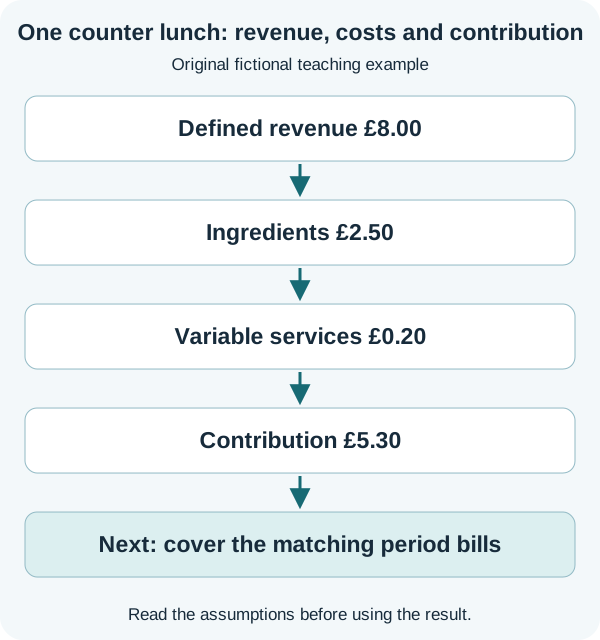
Here is a fictional tax-exclusive teaching comparison. A counter lunch produces £8 of café revenue, uses £2.50 of ingredients and £0.20 of defined variable payment and service cost. Contribution before period costs is £5.30. Takeaway produces £8, uses the same £2.50 of ingredients, adds £0.30 packaging and £0.20 variable payment and handling cost, leaving £5.
A delivery version produces £9 of café revenue before a separately recorded café-funded offer. It uses £2.50 ingredients, £0.50 packaging, £2 of agreed all-in variable services in this invented example and £0.50 funded promotion. Contribution is £3.50. The £2 service amount is not a published Deliveroo, Uber Eats or Just Eat commission. Replace it with your own documented all-in costs or a correct detailed breakdown.
| Route | Defined revenue | Costs counted here | Contribution |
|---|---|---|---|
| Counter | £8.00 | £2.70 | £5.30 |
| Takeaway | £8.00 | £3.00 | £5.00 |
| Delivery | £9.00 | £5.50 | £3.50 |
Delivery can still help if those orders are genuinely additional and fit spare capacity. Twenty additional orders at £3.50 contribute £70. If they replace twenty counter orders that would have contributed £5.30, the café loses £36 of contribution compared with that alternative. Real customer behaviour is uncertain; do not label every online order additional. Review the mix and your operating circumstances.
Check travel quality before promoting a dish. A leaking box or poorly travelling item can produce complaints, remakes and avoidable waste. Use a safe, appropriate test of the intended packing and journey. Do not sacrifice safe handling or accurate allergen information for a cheaper route. A delivery menu can be narrower than the counter menu when that better reflects the product and the kitchen's capacity.
Connect item contribution to the bills for the same month
Contribution is the amount left from sales after the relevant costs that change with those sales. It helps cover period costs such as rent, the planned team and subscriptions. A positive contribution is encouraging, but it is not proof of overall profit. Add contribution across the actual item and channel mix, then compare with the costs for that same period.
Suppose an invented café needs £8,000 of contribution to cover the period costs included in its monthly model. If its stable average contribution is £4 per order, simplified break-even is 2,000 orders. If it opens twenty-five days, that is eighty orders per opening day on average. That calculation assumes the average contribution and cost pattern hold. It does not prove that the café has demand for eighty orders or capacity at the busy time.
If the average falls to £3.50 because the mix shifts to delivery or ingredients cost more, break-even becomes about 2,286 whole orders, rounding up. If an extra shift raises included period costs to £9,000, the original £4 average now needs 2,250 orders. Show these as separate scenarios so you can see what changed. Do not combine optimistic sales growth with lower costs just to reach a target.
A mixed menu needs a weighted average. Suppose 300 orders contribute £3 each and 200 contribute £5 each. Total contribution is £1,900 across 500 orders, averaging £3.80. The simple average of £3 and £5 is £4, but that treats the two groups as equally common. Use counts, not the number of items in the menu, to determine the average relevant to your break-even model.
Busy tables and a busy coffee machine are different limits
A seat can be full while takeaway has spare capacity, or the coffee machine can be full while tables are empty. Identify the actual limiting resource: preparation station, oven, machine, till, packing point or seating. Record demand by service window. A daily target can hide an impossible lunch rush. Improving the bottleneck can be more useful than advertising more orders into the same queue.
Include lawful staffing and the real cost of an extra shift when required. Do not calculate a saving by assuming unpaid work or ignored employment obligations. The exact employment treatment depends on circumstances and should be checked separately. Costing helps plan a workable service; it does not remove the need to meet staff and customer obligations.
Stock, waste and cash: three related but different checks
Recipe cost describes what should be used in an item. Stock movement helps estimate what was used in a period. Cash records show when suppliers were paid. Buying £1,000 of ingredients does not mean £1,000 was consumed this week. Some may remain in stock. Opening stock plus purchases minus closing stock, adjusted for relevant transfers, gives a useful consumption check under a consistent valuation method.
For an invented week, opening food stock is £400, purchases are £900 and closing stock is £350, with no transfers. Consumption is £950. If you compare only purchases with the week's sales, you miss the £50 reduction in stock. If closing stock is counted incorrectly, the apparent consumption changes even when kitchen behaviour did not. Recount a surprising item and check pack units before blaming waste or a person.
Record known waste, staff meals and complimentary items through a clear process. They use ingredients even when they are not normal sales. A batch discarded for safety reasons is a recorded event, not a reason to reuse unsafe food. Ask why the batch was unnecessary or spoiled and correct the purchasing or preparation plan. Costs matter, but safe practice remains a boundary.
Keep a cash calendar for supplier invoices, rent, wages and likely platform deposits. A good contribution figure does not pay a bill before the money arrives. Stock can be valuable but is not spendable cash. If you buy more than needed to obtain a unit-price discount, include storage, waste risk and the timing of payment in the decision. A cheaper kilogram can still create a more expensive overall purchase.
Offers and bundles: check the whole basket
A coffee-and-lunch bundle can increase basket value, but its funded reduction still costs money. Compare what customers would otherwise buy with the bundle contribution. If an existing customer takes a discount on an unchanged order, the restaurant may lose contribution without gaining demand. If the bundle brings genuinely additional purchases with spare capacity, the result may be useful. State the assumption instead of claiming that every bundle is growth.
For a fictional bundle, defined revenue is £10, ingredients £3.20, packaging and variable payment costs £0.60, and funded promotion £0.50 counted separately. Contribution is £5.70. If the £10 revenue was already reduced by the same £0.50, do not subtract it again. Label whether you start before or after the funded reduction. This consistency matters more than a polished chart.
Test one bundle for a limited period with a budget and service boundary. Review sales mix, total contribution and queue effects. Advertising return based on sales alone does not establish profit. The campaign's cost and the cost of serving the orders still matter. Keep a clearly explained baseline and be modest about what caused a change when weather, events or normal variation could have contributed.
A four-week plan for a café owner starting from scattered records
In week one, cost three regular items using real invoices, usable quantities and agreed portions. Write the tax and revenue questions for your bookkeeper. Make the cards short enough for the kitchen to read. In week two, separate counter, takeaway and delivery sales for a consistent period and map the relevant route costs. Check one platform invoice rather than assuming the deposit tells you the charge rate.
In week three, build the monthly contribution and bill model with the actual sales mix. Test weaker demand and higher costs. Inspect the busiest station and note where service becomes unreliable. In week four, run one limited improvement: a clearer portion method, a better packing configuration, a narrower travelling menu or a corrected offer rule. Keep the customer promise and safe practices intact.
At each review, bring one checked result, one uncertainty and one action. You do not need every possible dashboard before making a useful change. You do need to know where the number came from and what it excludes. If a missing record could reverse the decision, obtain that record first. A neat calculation built on an unknown fee or incorrect recipe is still unreliable.
Open your UK café pricing checklist
Where to get help and what to bring
Bring recipe and purchase questions to the kitchen and supplier records. Bring a platform charge or deposit question to that platform's authorised support with the relevant invoice, cycle reference and narrow calculation. Bring tax classification and bookkeeping questions to the appropriate qualified adviser with the actual product, route and business details. These questions are related, but the same person may not be able to answer all of them.
Our support page can help explain this website's tools and receive interest in future overseas extractors. It cannot provide an authenticated UK platform report, decide your tax position or give permission to open a food business. Our main tools are currently India-focused; the workbook below explains their limits. Keep private financial records and customer information out of public support or community posts.
Research checked 12 October 2026. Primary references: HMRC catering and takeaway VAT guidance and Business Victoria calculation definitions. The examples, review plan and checklists are original educational material, not copied government examples or professional review of a particular café.
Before changing a price, write what you expect to happen
A price change affects more than the amount per item. Some customers may buy a different item, visit less often or choose another route. Some may continue ordering because the product offers value. The costing model cannot know that response. Write a range of possible demand before changing the menu so you can recognise whether the observed result is close to your expectation.
Suppose a fictional café sells 100 relevant lunches at £8 of defined revenue and £3 of relevant variable cost. Contribution is £5 each, or £500 total. If the revenue rises to £8.50 with the same cost and count, contribution becomes £550. If the count falls to ninety, contribution is £495. More money per sale did not guarantee more total contribution. This example holds costs and mix constant only to show the relationship.
Communicate prices clearly and update the relevant menus and systems. A customer should not discover an undisclosed change only when paying. Check bundles, modifiers and delivery listings so an old price does not remain in one channel by accident. Confirm any contractual or legal pricing requirements that apply. A worksheet recommendation does not override those requirements.
Review the result over comparable service periods, not just the first few orders. Record demand, mix and customer feedback. If the change produces a different result than expected, ask whether portion, quality, opening hours, events or service changed as well. Avoid attributing every movement to price. You can still make a useful decision while acknowledging that the experiment was not a perfect controlled study.
Can I keep an item that looks weak in the costing sheet?
Yes, if you understand and intentionally accept its role. It might support a group order, meet a clear customer need or use spare preparation capacity. Show that reasoning and check the whole basket or operation. Do not hide the weak figure or call the item profitable by leaving out its real costs. A deliberate limited choice is different from an unnoticed loss repeated every week.
What if the café owner works without taking a salary?
Show the actual cash arrangement and a separate long-term view of the owner's work. A business that depends on unpaid owner time can appear healthier than one paying someone for the same tasks. The correct accounting treatment should be confirmed for the business, but the planning question remains: could the operation sustain the required work if the owner needed a reasonable payment or cover?
Is the cheapest ingredient always the right one?
No. Compare usable yield, product quality, storage, preparation effort and reliability. A cheaper pack can require more trimming, spoil sooner or fail the customer promise. Also check supplier and food-safety requirements. Use a small appropriate test before changing an important recipe, and update allergen information when an ingredient changes. Price is one part of the decision, not permission to ignore the rest.
How do I stop the workbook becoming another job no one finishes?
Limit the first review to a few regular sellers, one complete period and one action. Use the same card each week and save the source date. Add detail only when it answers a real question. A simple repeatable routine is more valuable than a giant spreadsheet that has impressive headings but no current invoices, portions or follow-up.
Practice workbook: price a new lunch without copying someone else's café
Imagine a fictional neighbourhood café planning a lunch item called the roasted-vegetable sandwich. The name is only a teaching example, not a claim about an existing business. The owner wants a product that counter customers and pickup customers understand, and is considering whether delivery should carry the same item. Write three separate cost cards rather than choosing a single impressive target percentage.
First write the promised serving: bread quantity, filling portion, sauce, garnish and any included side. Next record the batch cost and usable output for the filling. If a batch costs £21 and gives fourteen usable portions, each portion costs £1.50. If bread is £0.65, sauce and garnish £0.25 and the included side £0.60, ingredient cost is £3. If another worker reads the card, they should know what the £3 actually buys.
Write whether the batch price is an actual invoice amount or a planned estimate. Record the date and conversion units. If the amount is estimated, get a supplier quote or small trial purchase before treating the dish as ready for a menu-wide launch. A screenshot of a wholesaler's cheapest listed pack may not match the pack, delivery charge or usable quality the café will actually receive.
Exercise one: choose the price basis before calculating
For this worksheet only, suppose the café is comparing tax-exclusive restaurant revenue values of £8 and £8.50. These are not customer-menu-price recommendations and do not establish the item's VAT treatment. The owner must confirm that separately. At the counter, assume £3 ingredients and £0.30 relevant variable payment and service costs. Contribution is £4.70 at the first revenue value and £5.20 at the second.
Ask what remains outside the result. Planned staff, rent, insurance and other period costs may still need covering. The £4.70 is therefore not the owner's take-home profit. Ask what costs change if the item becomes popular. If more sandwiches need extra preparation time or equipment, that decision needs another cost line rather than assuming the counter contribution stays valid at unlimited volume.
Now explain the calculation aloud without abbreviations: “For each sale under these assumptions, the café receives eight pounds of defined revenue and uses three pounds thirty of the costs counted here, leaving four pounds seventy toward period bills.” If that sentence is hard to say, the worksheet may contain too many unexplained categories. Clear words help a new owner detect a missing or repeated cost.
Exercise two: compare a proposed takeaway pack
Suppose a suitable safe takeaway configuration adds £0.40 and other relevant variable handling and payment costs remain £0.30. With £8 revenue and £3 ingredients, contribution is £4.30. The pack adds convenience but reduces the amount toward bills compared with the simplified counter case. Test whether the product remains enjoyable and honestly presented in that configuration. The cheapest container is not automatically the right one.
If a premium pack costs another £0.15, the arithmetic contribution becomes £4.15. Write the potential benefit you are testing: fewer leaks, better travel quality or easier eating. Do not invent the improvement. Use an appropriate small safe trial and record complaints or packing failures. If the cheaper pack repeatedly causes a remake, its apparent saving may not survive the full cost review.
At fifty takeaway sales, the £0.15 difference is £7.50. This establishes the scale of the direct packing difference, not the total value of the decision. A small verified quality improvement may justify it; an unsupported claim that customers will buy more is not evidence. Keep the financial amount and observed service result together when deciding.
Exercise three: test the delivery card with actual terms later
For an invented delivery case, use £9 revenue, £3 ingredients, £0.55 packaging and £2.10 documented-equivalent all-in variable services as an assumption. Contribution before a separately funded promotion is £3.35. A café-funded promotion of £0.60 reduces it to £2.75. These are not published platform fees or offers. Actual contract bases and tax treatment may need a detailed model rather than this fixed teaching amount.
Ask whether advertising is already included in the £2.10. If it is, do not add it again. If it is a separate period bill, allocate it using an explained method for the decision. Suppose a test costs £20 and brings ten genuinely extra orders at £2.75 contribution, with spare capacity and no other changed costs. Contribution is £27.50 and the direct remainder is £7.50. If only five orders are extra, the corresponding addition is £13.75 and does not cover the £20 bill.
This exercise shows why the platform's attributed count is not the same as a proven extra count. Some customers may have ordered anyway or chosen the counter instead. Write the uncertainty and compare reasonable alternatives. A small positive teaching remainder does not justify a large launch budget without evidence that demand, costs and service fit the real café.
Exercise four: connect the item to a realistic monthly target
Suppose the café's included monthly bills are £7,050 and it earns a stable £4.70 average contribution across the relevant mix. Simplified break-even is 1,500 orders. This is a whole-operation average in the example, not permission to use the sandwich's contribution for a different actual menu. If the observed mix averages £4.30 instead, the target is about 1,640 whole orders, rounding up.
List opening days and the pattern within them. If the café opens twenty-five days, 1,500 orders means sixty per day on average. If forty usually arrive during a short lunch rush, the line and till need to manage that period. Quiet afternoon capacity does not repair a lunch queue automatically. Inspect where work waits and choose a change that serves the intended customers without compromising safe food or employment obligations.
Keep the target and forecast separate. The target says how many comparable orders cover the stated bills. The forecast says how many you expect to sell. If the forecast is lower, do not simply raise it to match the target. Investigate price, costs, mix, opening hours or the operating plan. The gap is useful information, not a spreadsheet error to hide.
Exercise five: review a supplier change fairly
Imagine the filling batch rises from £21 to £23.80 with the same fourteen usable portions. Filling cost rises from £1.50 to £1.70. The sandwich's ingredients become £3.20 if all other ingredient costs stay unchanged. At the original counter revenue and costs, contribution falls from £4.70 to £4.50. Across 500 comparable sales, the difference is £100.
Ask whether the price change is final and whether yield is truly unchanged. A larger pack or different usable output can alter the calculation. Do not reject a supplier purely from an invoice total without checking quantity and quality. Do not swap a recipe ingredient without checking the menu promise, allergen information and suitability. A safe small test and a clear revised card help the kitchen understand the change.
Exercise six: prepare the owner's decision note
Write five lines: what you tested, what the records showed, what is still estimated, what change you propose and when you will review it. Include the recipe date and revenue basis. Attach references privately rather than publishing invoices. A note might say the counter item is viable under current portion costs, takeaway needs a pack test and delivery should remain a limited experiment until actual fees and demand are checked.
A conclusion like that is useful even without a guaranteed forecast. It avoids claiming that the item will certainly earn a particular amount in every month. It also gives the next worker a understandable sequence: use the agreed portion, record actual sales, report packing problems and review the supplier price at the stated date.
Reveal the practice answer check
Filling £21 ÷ 14 = £1.50. Counter contribution £8 − £3 − £0.30 = £4.70. Takeaway £8 − £3 − £0.40 − £0.30 = £4.30. Delivery before promotion £9 − £3 − £0.55 − £2.10 = £3.35; after £0.60 promotion = £2.75. Monthly £7,050 ÷ £4.70 = 1,500. These answers validate the stated arithmetic only, not the real café's inputs or tax position.
If your answer differs, first check whether you used the same price basis and counted each component once. If the actual café's contract differs, the worksheet should differ too. Do not change an actual invoice to make it resemble this fictional exercise. The model is there to explain a decision, not to make reality fit a predetermined result.
Seasonal specials: cost the small batch, then decide whether to repeat it
A seasonal special can give the café an interesting reason to welcome customers, but it can also leave ingredients that are not used elsewhere. Write the planned batch, how long it can safely be held under appropriate controls and the likely demand for that service. Avoid buying a large minimum quantity merely because the menu description sounds attractive.
Suppose a fictional special requires a £30 ingredient purchase that yields ten usable servings, with no leftover value in this simplified case. If all ten sell, ingredient cost per sold serving is £3. If only six sell and the remaining prepared portions cannot safely be used, the period's £30 ingredient cost is still real. Dividing the batch by only the six sold servings gives £5 of ingredient cost per sold serving in the actual review. Do not use the planned £3 cost to hide the unsold batch.
That does not mean every special is a mistake. It means the demand and batch size should be part of the decision. A smaller first batch, a suitable shared ingredient or a shorter controlled test may reduce waste. Keep any safe reuse plan honest and recorded; never keep food beyond safe conditions just to improve the finance result.
Before repeating the special, compare the planned and actual sold count, unused quantities, customer response and preparation burden. Ask whether it attracted genuinely useful demand or mainly replaced an established item. A popular photo is not the same as profitable sales. An appealing menu can stay simple if specials are selected for clear customer value and workable preparation rather than added endlessly.
Record the result in the item card and retain the regular menu comparison. The owner then has a practical reason to repeat, adjust or stop the special. No one needs a fancy classification to understand it: how much did we prepare, how much did customers buy, what did we safely use, and what will we do differently next time?
Choose a supported tool, then keep the evidence private
The main margin calculator uses rupees and Zomato/Swiggy labels. It is manual: it does not fetch a merchant agreement or verify tax treatment. The settlement analyser supports the specified Zomato/Swiggy report structures, not every platform's CSV. Try a fictional public sample first. DoorDash and Uber Eats extractors marked coming soon are not available importers.
Follow this guide's local-currency arithmetic in a private worksheet. Read the complete input and privacy manual if using a supported Indian workflow. Label revenue basis, per-order inputs and period costs, and count each fee or funded discount once. Never put passwords, bank details, customer records or unredacted reports in a public community post. Our support page can explain tool scope and receive future-feature requests; it cannot grant a food licence, file a tax return or audit an overseas account.