
UNITED KINGDOM · FIRST-TIME FOOD BUSINESSES
UK food business registration: what to do before your first café, takeaway or home-food sale
You want to sell food, but the search results keep saying “register,” “get approved” and “contact environmental health.” These words describe different tasks. Start with your actual location and what you will do. Then find the correct authority, make the required notification or application, and prepare a food operation you can explain. This guide gives you a practical sequence without pretending that one form settles every opening requirement.
Choose a section in this guide
First, understand registration and approval
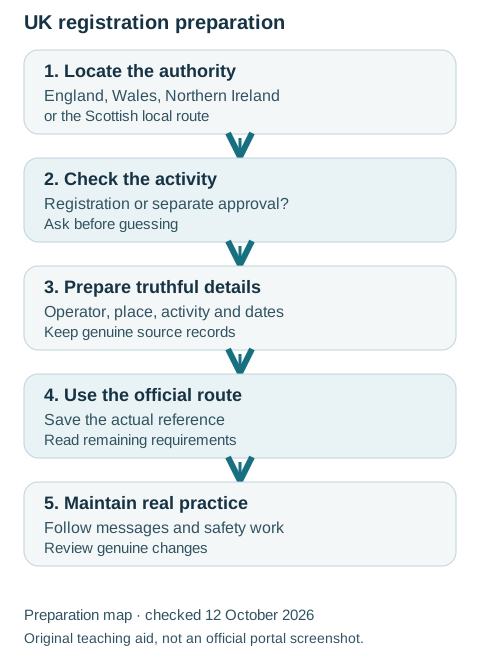
For England, Wales and Northern Ireland, the Food Standards Agency's published starting guidance says to register a new food business or takeover with the relevant local authority at least 28 days before trading. Ordinary food-business registration is free. Home, online and delivery operations are included; having no dining room does not automatically remove the requirement. If already trading without registration, contact the authority and register promptly rather than assuming a retrospective wait resolves everything.
Registration is not the same as an approval required for certain activities. Some operations handling products of animal origin for supply to other establishments need a separate approval assessment. Not every restaurant that cooks meat belongs in that route. Describe the real supply arrangement and ask the responsible authority when unsure. Where approval is required, do not start that activity before the appropriate approval. A registration acknowledgement cannot replace it.
Scotland has its own national reference: Food Standards Scotland. Its guidance also states free local-authority registration at least 28 days before opening and explains that some activities require approval. Use the Scottish route and local environmental health service rather than copying English forms or assumptions about inspection schemes. “Local authority” means the council responsible for the relevant place. “Environmental health” is the council service commonly dealing with food-business questions.
Check FSA starting guidance for England, Wales and Northern Ireland, the separate approval guidance and Food Standards Scotland's registration page. These route facts were checked on 12 October 2026; they are not a complete legal assessment of your business.
Step one: describe the work in ordinary words
Before opening a form, write a short private description. Explain which food you will prepare or handle, where it happens, who runs the operation and who receives the food. Include whether customers eat there, collect, order online or receive delivery. Do not use only “food startup” or “café concept.” Those labels can hide the activities the authority needs to understand and make the answer you receive less useful.
Imagine a fictional owner, Rowan, planning a small lunch café. Rowan writes: meals prepared in one rented kitchen, sold to customers at the counter and through authorised delivery orders, with ingredients stored there. Another operator makes chilled products for supply to other food businesses. Their marketing might look similar, but the authority needs the actual operation, not just the brand. This example does not determine either operator's legal category.
List planned changes as well as the first-day activity. If wholesale supply, a second kitchen or a separate product range is only an idea, mark it as a future question rather than silently assuming it is covered. Ask how the route would change before committing to it. The purpose of the description is honest communication, not finding the smallest-sounding activity that appears easiest to register.
Step two: find the right council and keep the country visible
Use an official council or national-government route to identify the relevant local authority. Check the operating location, not merely the address where a consultant works. A mobile operation, shared kitchen or several sites may need specific advice about the appropriate authority and records. Do not infer the answer from the closest council office on a map. Write down which authority confirmed the route and when.
Keep England, Wales, Northern Ireland or Scotland at the top of your private tracker. UK-wide marketing does not mean all local processes are identical. If you have a branch in another nation, check that branch's authority separately. Avoid collecting an English example form and presenting it as the one universal UK application. The current official channel for the actual business is the source of the requested fields.
Save the official page and verified contact route with your notes. An agent's search advertisement can look similar to a government result. Check the destination before entering identity or business information. A private service may offer assistance, but it is not the council. Do not send a password or one-time code to a person who claims they must access your account to guarantee an outcome.
Step three: check the place before committing to the fit-out
Food-business registration is one part of opening. Ask the relevant authority and suitable advisers about property use and other permissions that apply to the actual project. A lease describing a unit as commercial does not itself establish that your proposed food operation fits. Do not treat a delivery-only model as proof that building, ventilation, waste, access or other relevant questions disappear. This guide does not decide which permission a property needs.
For Rowan's fictional café, the owner makes a question list before paying for kitchen equipment: can the proposed operation use this place, what changes need checking, and which responsibilities belong to the landlord or tenant? They send a clear outline rather than a vague request for “approval.” If a specialist drawing or assessment is requested, they obtain it through appropriate qualified help instead of altering a generic plan downloaded online.
Keep a decision gate before major spending. A gate means a check that must be resolved before the next commitment. Examples are confirming the actual route, understanding the property position and obtaining a genuine quote for necessary work. A gate is an internal planning tool, not a new legal requirement invented by this guide. It makes uncertainty visible while there is still time to change the plan.
A home kitchen needs a real operating description too
A small home-food idea can still involve a food business. Explain the activity, storage, preparation and sale honestly through the relevant official route. Do not assume that occasional orders, social-media messages or delivery collection make the operation informal enough to ignore. Ask about the actual circumstances. If an exemption or different treatment may apply, obtain the answer from the responsible authority rather than a reassuring forum comment.
Separate food-business questions from permission to use the home for the activity. Your tenancy, mortgage, planning situation, insurance and household arrangements may need appropriate checks. This is a list of questions to investigate, not a claim that every applicant must obtain the same document. Record which source answers each question. A private preparation tracker should distinguish required, not required and still unclear.
In a fictional home-baking example, Mina plans to take orders online and collect ingredients in a shared family kitchen. Mina describes the actual work and asks the authority what applies, rather than copying a café pack. The working plan should account for the real space and people using it. This story does not certify that the home is suitable or that any particular food can safely be prepared there.
Step four: prepare a truthful information file
Make one private reference sheet for the operator, trading name, operating location, contact details, activities and intended start date. A trading name means the name customers know. It can differ from the legal person or company running the business. Read each actual field before entering a name. Do not paste the brand into every field simply because that is what appears on the sign.
Use genuine records to check the information. If two records disagree, find the correct source or ask how to clarify it. Do not edit an identity file or supporting document to create agreement. Keep a note of the discrepancy and the action taken. A neat file with altered evidence is not better than a clearly identified problem being resolved through the proper route.
Keep private records separate from public marketing. The authority may need information you would not normally put in a website article. Follow its actual request and privacy notice; do not falsify a required address because you prefer not to display it publicly. If you have a privacy concern, ask the authority how it treats the information and what options legitimately apply to your situation.
Plan the dates without pretending the calendar grants approval
Put the intended first trading date and the registration requirement into your private plan. The 28-day registration lead time is not a promise that all other checks finish in that period. A premises issue or approval-requiring activity can have its own process. Do not publish an opening date that depends on an unresolved decision without understanding the consequences and appropriate advice. A calendar reminder cannot replace the actual route.
In a fictional schedule, Rowan allows time to confirm the property and activity route before making a large launch commitment. The registration task has a clear owner and follow-up reference. Equipment delivery, staff practice and menu setup are separate tasks. If one prerequisite changes, the owner reviews the opening plan rather than asking the team to rush or claiming that the form submission guarantees the date.
If you are already operating without completing the required registration, do not wait another 28 days to start seeking help. Follow current official instructions and contact the responsible authority promptly. Describe the actual situation honestly. This guide cannot advise you to continue an activity that requires approval or decide the consequences of a particular case. Qualified and official advice is needed for that question.
Step five: submit through the actual official route
Open the appropriate official registration channel for your location and answer its current questions. This guide deliberately does not reproduce button positions from a portal we have not authenticated into. Forms change, councils may use different systems and a screenshot can become old. Follow the live field explanations and ask the official service when a question does not fit your operation.
Before submitting, compare the form with your reference sheet. Check name, operating address, contact information, dates and activities. Have another trusted person read it if appropriate. A reviewer can catch a missing unit or an old contact address without being a specialist. Do not send them unnecessary identity files; use the business's approved private way of working and restrict access to what they need.
After submission, save the reference or acknowledgement the actual system provides. Record the date and the next task. If you receive no clear confirmation, check the official channel rather than repeatedly submitting duplicate forms. Explain what you attempted, when and which reference you have. Ordinary food-business registration is free under the guidance cited above; a private assistance charge is not the government registration fee.
Step six: follow up on a specific question
Keep official messages in one place and assign somebody to check them. Read the whole message before reacting. A request for more information, a premises discussion and an inspection contact are different events. Record what is asked, who owns the response and any deadline actually stated. Do not invent a standard response deadline from another council's case or assume silence means every issue is resolved.
If the question is unclear, ask for clarification through the verified route. Include the business reference and a concise description of the uncertainty. “The form lists a separate trading name; should this field show the operator or the customer brand?” is more answerable than “my paperwork is wrong.” Follow the actual response instructions and keep evidence of what was sent rather than relying on a conversation remembered from last week.
Correct the genuine underlying information when necessary. If a contact changed, ask how to update it. If an activity expanded, ask how to record it. Do not create a new business identity merely to avoid discussing an earlier mistake. A transparent trail helps the authority and the operator understand the case. It also makes handover easier when the person who submitted is unavailable.
Build a food-safety routine that staff can explain
Registration does not do the daily safety work for you. Use the applicable official food-safety guidance and trained support to establish the procedures your operation needs. This article does not set cooking temperatures, storage life or a universal cleaning schedule. A safe method depends on the actual food, equipment, process and requirements. Commercial forecasts and social-media demand must not override the trained controls.
Test whether a new worker can describe the actual routine: receiving ingredients, identifying the right storage, following preparation instructions, dealing with an unexpected problem and knowing who can make a safety decision. If a document says one thing and staff do another, repair the real process. Do not copy a complete plan from a different kitchen and leave equipment or activities that do not exist in yours.
Keep the records your applicable system requires in a usable place. A pile of blank templates is not evidence that checks happened. Record genuine observations and corrective action as appropriate. If a check was missed, do not fill in a false historical value to make the file look tidy. Seek the right operational and professional response, and improve the process that allowed the gap.
Make ingredient questions understandable and safe
Allergen means a substance that can cause an allergic reaction in a person sensitive to it. The exact information and labelling requirements depend on how food is supplied and the relevant law. Use current national and local guidance for the actual sale method. Do not assume that a dine-in explanation automatically covers a delivery order or a packaged product. Check the requirements before promising a particular label.
Maintain a recipe and supplier-information trail so staff do not guess. A sauce or garnish can change the ingredients even when the dish name stays the same. If a supplier changes a product, review the recipe information before the old customer description is reused. A vegetarian or vegan statement is not a guarantee that food is free of every allergen. Avoid unsupported “free from” claims.
For an uncertain customer request, use the restaurant's trained procedure and be honest about what can be supported. Do not let a finance sheet decide that a substitution is safe. The customer-facing information, kitchen instruction and actual meal need to agree. The guide provides preparation questions, not a professional assessment that a recipe or shared kitchen is suitable for somebody's allergy.
For England, Wales and Northern Ireland, consult the current FSA allergen guidance. Scottish operators should check the corresponding Food Standards Scotland advice and their local authority.
Keep a useful supplier and product trail
A supplier record helps you establish which genuine ingredient or product entered the business and where relevant information can be found. Use the records required by your applicable system, with trained guidance on details and retention. This guide does not replace a traceability procedure. Traceability means being able to follow the source and relevant movement of food when needed, rather than relying only on someone's memory.
For Rowan's café, the private preparation file identifies the normal supplier route and where invoices and product specifications will be kept. A substituted sauce is not silently treated as the old one. The owner asks the responsible worker to check the applicable product information before the menu and recipe are updated. This is an original example of organisation, not a complete safety-control design.
If a problem or withdrawal notice occurs, follow the established safe process and official advice. Do not improvise a recall from a public guide or conceal a supplier change to preserve a sales target. Keep the business's responsible contact and escalation route clear. A finance export can help explain sales, but it is not automatically a complete food-product traceability record.
Four practice situations: choose the next question, not a guessed answer
A takeaway with no dining room
Lea plans to cook meals for delivery from a rented kitchen. Lea first writes the actual activities and location, checks the authority and separates ordinary registration from any approval or premises question. “No seats” is not the same as “no food business.” The team also needs a clear packing and safety process. A delivery platform's acceptance of the listing does not establish that all government and property requirements have been met.
Lea's next practical task is to find the correct official route and make a truthful operating description, not buy a generic “restaurant licence pack.” Where a specialist issue appears, Lea asks the relevant authority with the actual details. The outcome depends on the case. This example cannot establish permission for any real shared kitchen or certify the planned meals.
A café takeover
Omar is buying an existing café and sees its old paperwork on the wall. Omar checks the registration requirements for the new operator, as well as the current operation and premises position. The previous owner’s existence does not make every record transferable. Keep the buyer's legal operator, contact and intended activity distinct, and ask how the authority wants the change handled.
Omar also obtains a clear handover of genuine operating records and staff routines where appropriate. An old inspection document describes a point in time; it is not proof that the new team follows the same process today. The private handover should identify unresolved issues rather than hide them behind a familiar trading name.
A home baker adding supply to cafés
Mina's home-baking sales begin with direct customer orders, then a café asks to buy products for resale. Mina does not assume the existing route automatically covers the new supply arrangement. The actual food and activity matter. Mina explains the proposed change to the responsible authority and checks which registration or approval route and other requirements apply before accepting a fixed delivery commitment.
The preparation tracker records the answer and any next evidence needed. It does not decide eligibility based on the product's popularity or the size of the order. Commercial excitement can make a future activity feel like a minor extension, but it can alter the regulatory questions. Ask before promising a start date.
A restaurant in Scotland expanding elsewhere
A Scottish operator plans another location in England. The operator checks the second location with its actual authority and uses the appropriate national guidance. A familiar process from the first site is useful experience, not a reason to copy its forms or assume identical inspection arrangements. Keep location-specific records so a question for one premises does not receive the other's documents.
The shared brand can have a common plain-language safety culture and operating habits, while each location's official route remains visible. This makes a new manager less likely to mistake company-wide marketing for location-specific permission. The example illustrates disciplined expansion, not a legal opinion on a particular multi-site business.
A preparation budget without a fake government fee
Ordinary registration being free does not mean opening costs nothing. Separate the official registration task from premises work, equipment, training, professional help and other applicable permissions. Obtain genuine current quotes and record what each includes. Do not label a consultant's package charge “the registration fee.” The customer should understand whom they are paying and what service, if any, is being purchased.
Use an original fictional budget to practise. Equipment is estimated at GBP 1,800, appropriate training and setup support at GBP 250, opening stock at GBP 450, and a stated contingency at GBP 300. The subtotal is GBP 2,800. A GBP 400 deposit is part of an equipment quote already included in GBP 1,800, so adding it again would inflate the budget to GBP 3,200. All amounts are invented, not market quotes or legal fees.
Show cash dates separately. The deposit may be due before the balance, while stock arrives later. A budget total does not tell you whether money is available on each date. Add a private payment calendar using the real arrangements. Do not finance commitments with a guessed platform earnings forecast. Food-business registration does not promise customer demand or a profitable first month.
Keep platform onboarding separate from the authority's work
Deliveroo, Just Eat, Uber Eats and other platforms can have their own current onboarding and commercial requirements. Their checks do not replace the authority's route, property position or safety duties. Conversely, a registration acknowledgement does not guarantee a platform listing or customer orders. Keep each task in its own row with its own evidence and responsible person rather than one checkbox called “approved everywhere.”
Read the agreement and authorised report definitions when planning delivery economics. A payout can include deductions, refunds and older adjustments; it is not automatically sales or profit. Do not use a universal internet commission percentage to decide whether the proposed menu works. A recipe, packaging and locally relevant cost model belongs beside the commercial terms, not in place of them.
Our current extension supports selected Zomato and Swiggy records, not a universal UK-platform export. DoorDash and Uber Eats extractor enquiries are feasibility discussions, not available installations. The main rupee-based tools are not UK licensing services or automatic GBP contract calculators. Use the international enquiry route for a future data requirement, never government identity documents or passwords.
Common application problems and a calmer response
I used the wrong name
Find the actual field and the genuine source it should match. Is the issue the operator, trading name or contact person? Ask the official channel how to correct the submitted information rather than editing the acknowledgement file yourself. Save the response and the genuine corrected record. Do not assume a new registration is needed without checking the actual case.
I cannot find a confirmation
Check the official submission route and the reference you saved. Look for a genuine message in the registered contact channel, including appropriate spam checks. If uncertain, ask with the date, operator and reference through verified support. Repeatedly submitting from several email accounts can make the situation harder to explain. Do not interpret a browser closing as evidence that the authority received the form.
A helper says I must pay for free registration
Distinguish an optional assistance service from the ordinary official registration task. Ask for a clear description of the service and charge, and verify the actual government route. Do not accept guaranteed approval or urgency claims as evidence. Check unexpected communications independently using a known official contact before sending money or sensitive records.
I do not understand a query
Break it into the information requested, the field or activity involved and the next action. Ask for clarification when necessary, without assuming the query has been resolved merely because you replied. Keep any actual deadline visible. A specific response with genuine supporting information is more useful than a long message that does not answer the question.
Prepare to explain the actual business, not a rehearsed display
An official visit or discussion is easier to handle when records and practice agree. Staff should know the normal procedure and where relevant evidence lives. Do not create false completed logs just before a visit or hide an activity from the description. If a process needs improvement, seek the appropriate trained and official guidance and record the genuine corrective work.
Keep responsibilities simple: who reviews messages, who maintains the operating records and who can answer a food-safety question? The owner does not have to memorise every form to manage these duties, but cannot rely on one absent consultant holding the only copy. Ensure a suitable handover and business access through supported arrangements. Never store passwords in the same shared sheet as a general preparation checklist.
This page's checklist cannot predict an inspection result or a hygiene rating. Different national and local schemes must not be flattened into one UK-wide claim. The practical goal is to make a truthful operation clear and maintain safe routines, not to collect a decorative score or use registration as a marketing guarantee of perfection.
After launch, review changes before assuming they are covered
When the operator, location, name or activity changes, check the relevant official update process. A new brand at the same operation is not automatically the same question as a second premises. Ask what the authority needs for the actual change and retain the answer. Do not copy another business's interpretation because its menu happens to be similar.
Maintain a private change log. Record what changed, when, which records were updated and which official or commercial checks remain outstanding. A supplier change can affect recipe information; a new product can affect the operating description; a location change can alter the authority. The log connects these events without claiming one generic form deals with all of them.
Review public information too: genuine hours, menu contents and verified contact routes. A safe, properly described operation can still confuse guests if the listing shows an old offer. Keep the financial review separate from legal permission while allowing both to inform planning. Use the weekly review method for operational questions, with local-currency records and the limitations of our main tools understood.
Make a one-page handover that somebody else can use
At the top of the handover, put the actual operator, operating description and responsible authority. Underneath, list submitted references and unresolved questions. Then identify where the genuine records live and who checks messages. Keep access to sensitive evidence restricted. This handover is a business organisation tool, not a new official application or a document every council necessarily requests.
For Rowan's fictional café, the unresolved question is the planned extra product activity. The handover states that it is not yet part of the launch commitment and names the person seeking advice. It does not bury that uncertainty inside “all paperwork complete.” A new manager can see the boundary of what has been checked and avoid accidentally promising customers an offer that still needs investigation.
Use dates beside decisions. A helpful note says which official page or response was used and when. It does not claim a requirement stays unchanged forever. If the operation or guidance changes, review the affected answer rather than rewriting the whole file without a trail. Keep a corrected version and explain what changed so the person following the plan understands why an earlier assumption no longer applies.
Separate a business identity from permission to sell food
An owner may have a company record, tax reference, bank account and attractive logo before dealing with the food-business route. These serve different purposes. Do not call the collection a food licence simply because it proves that a business exists. Ask which specific record establishes each task: who operates the business, where it trades, what activity is covered and which authority is responsible.
The same distinction helps when talking to a platform. A platform may ask for evidence relevant to its own onboarding process. Submit genuine records through its authorised route, but do not interpret its acceptance as the authority's decision about every activity or premises issue. Keep the government, property, commercial and safety tasks visible separately. One encouraging email should not erase the remaining work.
If a helper calls a document a “certificate,” ask what it actually certifies, who issued it and which business or place it concerns. Do not edit an old file or rely on a decorative badge. A truthful record with a clear limitation is more useful than a collection of impressive-looking documents whose meaning nobody can explain. This guide does not provide official certificates.
Use the checklist without making it a pass-or-fail test
Tick a preparation item when you can explain the evidence, not when you feel optimistic. If a task is unclear, write the next question in your private notes. “Ask the council whether this added supply activity changes the route” is actionable. “I think the neighbour did something similar” is not enough to treat it as checked. The checklist is there to reveal the next task, not reward a rushed completion.
Have a trusted colleague read the plan back in plain language. Can they say who runs the operation, where it happens, what will be sold and which questions remain? If the answer relies on unexplained abbreviations, rewrite the summary. This is especially useful when a consultant has prepared technical material; the owner still needs to understand the commitments being made.
Finally, keep the public article and private case separate. You can return to these headings for help, but your actual documents, deadlines and official responses belong in the appropriate business records. Do not post them in the community to prove that a checkbox is complete. The guide should help you ask clearer questions and organise safer preparation, not create a new place where sensitive information is exposed.
Interactive preparation checklist
Tick only a task you have genuinely checked. The progress is not saved or submitted and is not an approval result.
Questions a first-time owner may still have
Does free registration mean the council cannot raise safety issues?
No. Do not confuse the ordinary registration process with the operation's continuing duties or other required permissions. A free notification is not a certificate that a kitchen is safe, a premises decision or a promise that every proposed activity may start. Ask the authority about the actual route and follow the applicable requirements.
Can somebody help me fill in the form?
You can seek appropriate help, but remain clear about what is submitted on your behalf. Keep genuine records, the official reference and an agreed handover. Do not share credentials with an unverified helper. An optional assistance service should explain its fee and limitations honestly rather than pretending to be the authority or guaranteeing an outcome.
Can I use the previous owner's registration?
A takeover needs its own checks for the new operator. Use the current official route and ask how the actual change is handled. Old paperwork is useful context but does not replace truthful current operator, contact and activity information. Do not edit the previous owner's acknowledgement to create a new apparent record.
What should I do before buying a full kitchen?
Confirm the activity route, property questions and genuine requirements with appropriate sources first. Keep uncertain commitments visible in the budget. A quote is not a permission, and the seller's claim that equipment is suitable does not settle the premises position. Obtain the professional advice needed for a significant or specialist project.
Does this article replace official safety training?
No. It explains preparation and common points of confusion. It does not establish safe cooking, storage or allergy procedures for your actual operation. Use the applicable official material and trained help. Staff need a method they can follow in the real workplace, not just familiarity with words in an online article.
Where should I ask a question about my particular application?
Begin with the verified responsible authority and include the relevant reference and clear question. Share only the evidence needed through the appropriate private route. Our community can discuss general preparation using fictional examples, but public comments should not contain identity files, personal addresses, customer records or account secrets.
Official sources and limits
- Food Standards Agency: starting a food business — updated 19 August 2026; England, Wales and Northern Ireland.
- Food Standards Agency: approval of a meat or food establishment — separate activity-dependent approval route.
- Food Standards Scotland: registering a food business — Scottish registration and approval distinction.
- FSA allergen guidance — check sale method and jurisdiction.
- Food-business registration privacy notice — read the actual information-use notice before submitting.
Checked 12 October 2026. We did not submit a registration, inspect a kitchen or test an authenticated council portal. Portal labels and local requirements can change. Fictional stories illustrate decisions; they are not testimonials or evidence of approval. Use the official current route when it differs from this preparation summary.