
NEW ZEALAND · START WITH THE ACTUAL FOOD ACTIVITY
New Zealand food business registration: a beginner's guide to the plan, authority and verifier
If you have searched for a “food licence NZ,” you may have found several different words: food control plan, national programme, registration and verification. They describe related but separate tasks. Begin with what you will actually do. Then use the official guidance to find the applicable rules, prepare the right method, identify the registration authority and arrange the checks relevant to your route.
Choose a section in this guide
The words you need, explained once
MPI means the Ministry for Primary Industries. New Zealand Food Safety is part of MPI. A food control plan, often shortened to FCP, is a written method for managing the relevant food-safety work. A national programme is another Food Act route with requirements suited to its applicable activities. It is not a grant programme or a marketing scheme. Do not choose between them by which name sounds less serious.
Registration records the business under the appropriate route. Verification is an independent check that the actual business follows the applicable safe-food requirements. A verifier is the appropriately recognised person or agency doing that check. Evaluation, where required for a custom plan or new content, concerns the proposed method. It is not the same as watching the registered operation put the method into practice.
A template is an approved starting method that can be used when it covers the actual activities. Custom means a plan tailored through the applicable custom route; it does not automatically mean better or necessary for every café. A registration authority is the council or MPI responsible for recording the relevant business. These definitions help you understand the next question, not decide eligibility without the official tool and appropriate advice.
Step one: find the rules for the actual activity
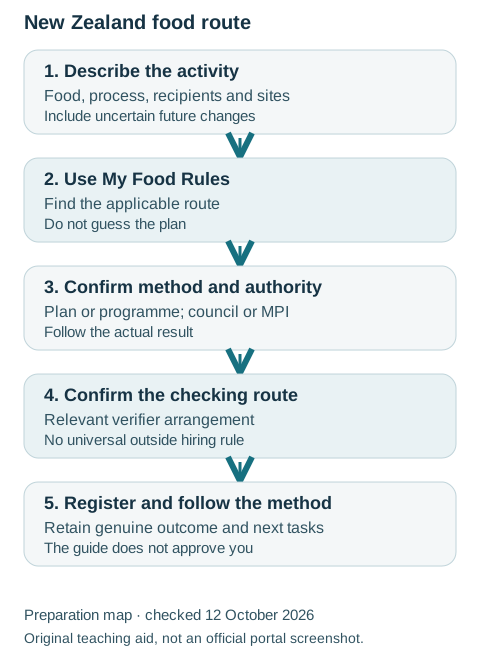
MPI's starting guidance directs users to My Food Rules, its official tool for finding the applicable legislation, plan or programme and registration route. It can identify that a Food Act route is not the whole answer for some activities. Do not assume every food-related business follows the same framework. Use the real products, processes, recipients and locations when answering, and seek help when an answer does not fit.
For activities requiring Food Act registration, arrange registration before selling food. Some exemptions exist, but they should be established through the applicable official route rather than guessed from the business being small or home-based. Exempt from registration does not mean exempt from providing safe and suitable food. This guide deliberately does not publish a universal exemption quiz that might miss a relevant activity.
Keep the result and date in your private records. If the operation changes, revisit the question rather than assume the first answer stays valid. This article does not invent current button positions or claim to have completed the tool for your case. Start at MPI's official starting page and follow its My Food Rules link and current instructions.
Describe food, process, customers and places before using the tool
Write what you will make or handle, how the food reaches customers and where each part happens. Include preparation, storage, transport and any supply to other businesses where relevant. A business name such as “café,” “home baker” or “meal startup” does not describe every activity. The same brand can use different processes that raise different questions. Keep future proposals separate from the first launch.
We will follow a fictional operator called Harbour Lunch. The owner plans to prepare meals at one site, sell to people there and offer collection and delivery. They describe the actual operation before choosing a plan. Another fictional operator wants to supply products to several retailers. Their activity and recipient details deserve their own check rather than automatically copying Harbour Lunch's approach.
Do not adjust the description to obtain a cheaper or simpler result. If a process is uncertain, write the uncertainty and ask MPI or the appropriate council a specific question. “We intend this preparation at this type of place and this supply arrangement; which part of the tool should we clarify?” is more useful than “Which registration is easiest?” Truthful answers are the foundation of a useful route.
Step two: confirm the plan or programme, not just the file title
MPI describes template food control plans as pre-evaluated methods that may avoid creating a custom plan when they cover the business's activities. The official Simply Safe & Suitable template is used by many food-service and retail businesses. This does not decide that every café fits it. Use the current official route to confirm coverage and the appropriate version before paying for unnecessary custom-plan development.
A national programme has its own applicable requirements, records, registration and verification. It is not permission to ignore food safety because a full written FCP is not the selected measure. Follow the actual requirements and current guidance for the identified programme. Do not select a lower programme number simply because it seems cheaper; the food activity determines the relevant question.
For Harbour Lunch, the private tracker records the official result, the method obtained and the activities it covers. If something is outside that coverage, the owner asks before adding it. A filename saying “food plan” does not prove the correct route. Keep the official source and result with the actual method so another manager can understand how it was chosen.
See MPI's template-plan explanation and national programme guidance. Current indexed sections were reviewed on 12 October 2026; no route was assigned to a real business.
Do not confuse My Food Rules, My Food Plan and a custom plan
My Food Rules is the route-finding tool. My Food Plan is a particular tailored plan option described within MPI's custom-plan material. Simply Safe & Suitable is a different named template. Similar wording does not make these interchangeable. Read the actual result and official next steps rather than using whichever PDF an adviser first sent. If uncertain, ask which route and document applies to the proposed activity.
Where a custom route requires evaluation of new material, follow its official process and requirements. Do not pay for evaluation merely because every new business feels “custom.” First establish whether an appropriate pre-evaluated template or method covers the work. Where new sections or a specialist process genuinely need assessment, obtain suitably qualified and recognised help. This guide cannot design or approve those procedures.
MPI's current custom-plan material distinguishes evaluation from verification and calls for an evaluator report and verifier arrangement where applicable. The person assessing the proposal and the person checking operation have different roles. A generic consultant's report should not be treated as evidence of every required assessment. Confirm the actual recognised role and scope before committing to a service.
Use the current My Food Plan steps and custom FCP guidance when the official result directs you there. They are not mandatory purchases for every small café.
Step four: confirm who will check the business
MPI's verification guidance says businesses under a national programme or custom food control plan contact a verifier before registration and include the confirmed verifier's letter with the application. It also identifies a council-verification arrangement for a Simply Safe & Suitable business operating in one council region and selling mainly directly to consumers. Do not tell every café it must independently hire an outside agency without checking those conditions.
Other template situations can use someone with the appropriate recognition. Recognition means the official status needed for the relevant verification work, not just a provider's claim to be experienced. Use the official guidance and register to check the role and scope, then confirm availability with the actual authority or provider. A general training course is not automatically a recognised verification service.
Ask about the relevant timing and cost for your route. Current sources contain route-specific instructions, so this guide does not promise one first-visit deadline, hourly fee or frequency for everyone. Record the actual confirmed arrangement and any official deadline in your private calendar. Registration and verification are connected stages; do not assume one replaces the other or that a letter means the visit has already happened.
See MPI's verification guidance and its explanation of recognised roles. These public indexed sections were reviewed, not an authenticated booking or assessment.
Ask for a clear service quote when a service is needed
Explain the identified route, activities, sites and intended schedule. Ask what the quote includes: preparation, visit, travel, reporting and any follow-up, where relevant. Do not compare two headline amounts without checking scope. A cheap-looking quote can omit a needed stage, while an expensive-looking one may cover additional work. Confirm the provider's appropriate role rather than choosing by price alone.
Keep a statement of what is not included. For a specialist plan, one provider may evaluate specified new sections without preparing the full application. A verifier may check the actual operation without designing it. The owner should understand these boundaries. Do not assume paying one person transfers every ongoing duty to them or establishes that all other government and property questions are complete.
If advice conflicts, identify which task each adviser means. Are they discussing route finding, plan preparation, evaluation, registration or verification? The answers may concern different stages rather than disagree. Ask the responsible official source about the actual uncertainty and keep the answer. This makes the next commitment clearer and prevents buying a service simply because its name sounded similar to a requirement.
Check the operating place separately from the food route
Registration under the identified food route does not settle every property or local-use question. Ask the council and appropriate qualified advisers what applies to the actual place, proposed work and activity. A lease or commercial unit advertisement is not itself a safety assessment or complete permission for every use. This guide does not provide a national fit-out design or determine which local approvals are needed.
Harbour Lunch's owner records property questions before a major equipment deposit. They explain the proposed preparation and storage work and ask what information the council needs. If a specialist plan is requested, they obtain suitable help rather than converting a marketing floor sketch into an apparent professional document. The food-plan route and the physical-place questions remain linked but distinct in the tracker.
For a shared kitchen, be clear about the actual operator, activities, boundaries and records. Do not assume the building's existing user automatically covers every other business working there. Describe what is shared and what the proposed business does separately. Seek the appropriate official and trained advice. This story does not determine that a particular shared space is suitable or that a registration is transferable.
Step five: prepare the actual requested information
Use the current authority's request and application list. Create a private tracker with item, genuine source, responsible person, version and reviewed status. Distinguish requested, not requested and awaiting clarification. A national article cannot make every possible document mandatory for every route. The current form, plan type and actual activity control the relevant pack.
Check operator, trading name, contact and operating details against genuine records. A trading name is the name customers know; it can differ from the legal operator. Read the field before copying a brand into every answer. If records conflict, obtain a proper correction or clarification. Do not alter an identity or company file in an image editor to make a mistaken form look consistent.
Open the actual files before marking them ready. Confirm readable complete pages, the correct operator and place and the applicable current format instructions. If a file is compressed, inspect that version. Keep the genuine submitted copy in approved private storage, with appropriate access and retention. A message attachment sent to a helper is not necessarily the file the authority received.
Use current plans, cards and forms
MPI's forms and documents index lists current plan material and records, including 2026 updates. Use the official current index rather than a file passed around for years. A translation or older blank can be helpful context, but should not be assumed current simply because the title sounds familiar. Check the actual applicable version and required updated content with the official source and appropriate adviser.
Keep the source and date beside the working method. If a card or form is updated, identify which part affects the operation and how the change is communicated to staff. Do not quietly replace files without explaining what changed. A new manager should be able to tell which method is in use and which records connect to it, rather than finding several contradictory “final” versions.
This guide does not redistribute a government plan or copy its detailed safe-food instructions. The official file needs to remain connected to its own guidance and updates. Our preparation notes, checklists and fictional examples are separate learning aids. They cannot replace the registered method, official records or a requirement to follow the actual plan or programme.
MPI forms and documents index — its public indexed page states a review date of 12 August 2026 and lists updated material.
Step six: apply through the confirmed authority's process
Follow the authority's current instructions for the actual route. This guide intentionally does not invent a registration button, require an administrative-system login or claim to have tested every council form. Systems vary and can change. If an actual question does not fit the activity, ask for clarification rather than choosing an inaccurate answer just to continue.
Before submitting, compare the form, identified route and genuine evidence. Check any verifier confirmation or evaluation information required for that route. Have an appropriate final reviewer check the pack. Read declarations carefully and retain the actual submitted version and reference. Keep payment evidence where fees apply, with the charge explained by the current authority or provider.
Submission, payment, registration and a verification visit are different events. Read the actual outcome and remaining next steps. A successful card debit is not proof that every stage is complete. If status is unclear, check the official reference through verified support before creating duplicate applications or payments. Record the time and actual problem without exposing account secrets.
Step seven: answer messages without starting the wrong process again
Assign somebody to check the registered contact channel and official case. Read a query in full. Record what is asked, who will respond and any deadline actually given. Do not use a deadline from an old tutorial or another council's case. A query about activity coverage, a readable file or a verifier arrangement requires a targeted answer rather than a general collection of extra documents.
Make a response table with requested item, relevant field or file, genuine evidence and confirmation of submission. If the request is unclear, ask the verified authority while keeping the actual deadline visible. A draft saved privately may not be a response received. Follow the live process and check the acknowledgement or status. Do not assume a conversation automatically pauses every deadline.
If the answer changes the route, record why and seek the proper next instructions. Do not edit an issued record yourself or create a new identity to avoid discussing the first mistake. A transparent trail helps the owner and authority understand the case and allows a new responsible person to take over without rebuilding the story from scattered messages.
Step eight: make the method usable during real work
The plan or programme needs to be understood by the people using it. Ask staff to explain the actual procedure for receiving, storage, preparation, cleaning, problems and escalation. A printed file nobody reads is not the same as a working method. Use the applicable official instructions and trained help rather than letting a public article design safety controls for an unknown kitchen.
Do not invent cooking temperatures, shelf life or transport limits from a financial target. If the business needs a specialist process, obtain the proper evaluation and safe operating advice. Commercial product quality, such as appearance after delivery, does not establish safety. A nice-looking dish and a high customer rating cannot replace the required food-safety work.
Record genuine observations and corrective action under the actual method. If a check was missed, do not write a false historical result to complete a log. Seek the appropriate safe response and improve the process that allowed the gap. Our checkbox progress is an educational aid, not an inspection result or proof that a food product is suitable.
Prepare for verification by explaining normal practice
Know the actual visit or checking arrangement and the relevant requirements for your route. Keep the method and appropriate records available through the business's approved system. The verifier needs the actual operation, not a special performance created only for a visit. If a procedure and daily practice disagree, identify and address the gap with suitable help rather than conceal it.
Ask staff who owns each task and how an unexpected issue is handled. If the document names equipment not present in the business, or a worker cannot find the instruction they need, repair the real method and handover. Do not copy a whole plan from a different operation and assume that sharing a menu style makes it fit. The food, process and route matter.
After a checking outcome, record the genuine findings and next actions. Do not advertise a broad certification that the result does not establish. Follow any actual requirements and deadlines through the responsible process. This page does not predict the outcome, determine a verification frequency or guarantee that a particular file pack will pass.
Practice situations: what question should the owner ask next?
A single-site lunch café
Harbour Lunch describes its food work and uses the official route to identify the applicable plan. If the result is a Simply Safe & Suitable template for one council area and mainly direct consumer sales, it checks the council registration and verification arrangements. The conditional “if” matters: this fictional story is not an automatic category assignment to every lunch café.
The owner records the authority, method version and next task. They do not buy custom-plan evaluation just because opening a business feels new and complicated. If an activity is not covered, the owner asks about it before committing. The next action is based on the actual result, not a guide's popularity or a helper's cheapest package.
A business directed to a national programme
The operator follows the identified programme's current requirements, registration route and verifier arrangement. A programme does not mean no records or no checking. The owner confirms the appropriate recognised verifier and any required letter before submission. They retain the actual quote and arrangement, without assuming a template café's council-check process applies automatically.
When an adviser uses the word “plan” casually, the owner asks which official measure is actually being discussed. This prevents the programme and a custom FCP being mixed together in the application. The operator still needs safe and suitable food. A simpler-looking route is not a permission to skip the requirements that belong to it.
A home producer planning a new supply arrangement
The owner includes home preparation, storage, direct sales and proposed supply to another business in the description. They use the official tool and seek clarification of any activity outside the initial coverage. They do not infer exemption merely because the business is small or uses social media. Separate property-use and other relevant questions are checked with appropriate sources.
The owner keeps the home operation's real limitations visible in planning. If a promised order depends on an unresolved route or specialist process, they do not commit to the date first and ask later. This is a preparation lesson, not a decision that a particular home or product can operate under a specific plan.
A second operating site
A business with another actual operating site revisits the authority and verification questions rather than assuming the first registration number covers everything. MPI's authority table describes relevant multi-site choices for specified routes. The owner checks which applies and keeps location-specific records so the new site's documents are not confused with the original.
A wider delivery area alone is not automatically the same as a second preparation site. Explain where work happens and follow the official advice. This distinction avoids both unnecessary duplicate applications and missing an actual place that needs attention. The guide cannot decide a multi-site case from the number of suburbs on a marketing map.
Budget separately for the actual stages
Obtain current confirmed costs from the authority and appropriate service provider. Registration, verification, evaluation where applicable, professional help and property work can be separate items. This guide publishes no universal NZ registration fee, hourly verifier price or total processing time. Ask what is included and what remains uncertain, including travel or follow-up if relevant to the actual arrangement.
Use an original fictional NZD budgeting exercise. Equipment is NZD 1,500, opening stock NZD 300, a stated professional service NZD 200 and contingency NZD 250. The subtotal is NZD 2,250 before any actual regulatory or additional project costs not yet established. An equipment deposit of NZD 400 is already part of the NZD 1,500 quote. Adding it again would inflate the subtotal to NZD 2,650.
Write payment dates alongside totals and keep a delayed-opening scenario. The deposit may be due before the balance, while stock should be planned around the actual safe operation. A quote does not grant permission, and a registration does not promise sales. Do not rely on an unverified delivery-platform earnings forecast to fund obligations already committed.
Understand the difference between a planning estimate and a fee
A private estimate helps you plan, but it is not a regulator's charge. Label it estimated and name the genuine source when available. If a cost is unknown, leave it visible rather than quietly enter zero. A precisely formatted subtotal can hide missing work. The budget should show uncertainty clearly enough that the owner knows what must be confirmed before the next commitment.
If a service quote changes, keep the version and explanation. Did the scope expand, travel differ or another stage become necessary? Do not assume a higher cost proves unfair treatment or that the first quote covers work it excluded. Read the actual agreement and ask a precise question. A general guide does not establish refund or cancellation rights for your contract.
Keep delivery-platform setup outside the registration result
DoorDash, Uber Eats and other services can have their own current account and commercial requirements. Use their authorised processes. Platform acceptance is not a Food Act route decision, and a registration does not promise a platform listing. A delivery model also needs genuine packing, handover and safety procedures; having no dining room does not make those questions disappear.
For business analysis, use NZD records and actual report definitions. An order period, payout period and bank arrival can differ. A payout is not automatically sales or profit, and platform fees cannot be guessed from another country's tutorial. Use the New Zealand café weekly review to connect sales, costs, staff work and cash with original local-currency examples.
Our main analyser supports specified Zomato and Swiggy exports, not automatic New Zealand DoorDash or Uber Eats uploads. The main rupee-based calculator is not a local licensing or tax service. Contact us about a future extractor requirement if useful, but do not send passwords, tokens, raw customer records or government identity documents. The enquiry is not an available installation.
Review a changed activity before treating it as covered
A new product, process, recipient or operating site can change the relevant questions. Revisit the official route and ask the authority about updating the actual registration or method. Do not assume that a profitable product or familiar brand fits the existing coverage. A commercial launch decision should wait for the important route and safety questions to be understood.
Keep a private change log with the old activity, proposed change, official question, genuine answer and next task. If a supplier substitution changes ingredients, update appropriate recipe and customer information through the actual safe process. If a plan section changes, use the applicable amendment guidance. This article does not determine that every change is minor or specify one universal amendment form.
Review genuine notices about current plans and records, and retain the update trail. A business can maintain simple plain-language staff notes while preserving the actual official method and required documents. Those notes should explain the process, not replace it with an unofficial shortcut. A new manager needs to know both what staff do and which registered framework governs it.
Common points of confusion and the next useful action
I am told to find a verifier, but my café uses the council
Check the exact plan, area and sale arrangement. The council-verification conditions in the official guidance are specific, while national programmes and custom routes have their own pre-registration requirements. Ask the authority which arrangement applies to the actual operation rather than copying a universal hiring instruction. Keep the genuine answer and booking or confirmation information.
I cannot open an MPI page
Use the official starting index and verified support when needed. An access problem is not proof that a requirement disappeared. Current indexed material can help identify the topic, but should not be mistaken for an authenticated case status. This article's research encountered direct-access blocks and therefore does not pretend to show every current portal control.
I downloaded several plans and do not know which is right
Return to the actual activity description and official result. Identify the relevant method and version, then archive irrelevant working copies so they are not accidentally used. Seek clarification rather than choose the shortest file. Similar names do not establish identical requirements, and an old translation or template may not include current applicable content.
Can I start because I have paid?
A payment is one event, not a complete outcome. Check the actual registration status and remaining route requirements through the confirmed authority. Do not treat a bank debit as every needed permission. Keep submission, payment, registration and verification records distinct so the next action is visible and the story remains truthful.
Practise explaining an uncertain activity
Take a proposed new product and write four sentences: what it is, how you intend to make or handle it, where the work happens and who will receive it. Add the point you do not understand. This is a private preparation exercise, not a replacement for the official tool. Its value is making the question specific enough that the authority or qualified adviser can recognise the issue.
For a fictional extension to Harbour Lunch, the owner wants to supply a prepared product to another retailer. The owner does not simply say “we already have a café registration.” They describe the new process and supply arrangement and ask whether it fits the current method or needs another step. The existing commercial success of lunch meals does not answer the regulatory question for the added product.
Now imagine the owner plans only to clarify an existing menu description without changing ingredients or process. That is a different practical change. The owner still checks accuracy and relevant customer information, but does not assume every wording edit means the whole registration route changes. The correct response depends on what actually changes. Clear description prevents both unnecessary work and an important activity being overlooked.
Put advice into a small decision record
Record the question, official source or appropriately qualified responder, date, answer and next action. Keep the answer in its own scope. “This response concerns the proposed activity described here” is better than “this rule applies to all cafés forever.” If the facts later change, revisit the answer. A decision record helps a second manager understand why the first owner chose the route.
When several advisers participate, keep their roles visible. A person helping organise files may not be evaluating a specialist process. A provider's visit quote may not cover application preparation. Read the service description and ask about gaps. The business still needs to understand the actual method and duties, even when suitable professional help is used.
If a task cannot be completed yet, write a realistic next check rather than a guessed result. “Confirm the required current version with the authority” is useful. “Probably complete” hides the uncertainty. This approach keeps the preparation moving without pretending the guide or checklist can decide the case. It also avoids making an opening promise based on a missing answer.
Protect the records while seeking help
Ask general questions with fictional or carefully redacted examples where possible. Use verified private official channels for case evidence. A registration file can contain personal and business information unrelated to the question you want answered. Do not post the full pack in a public forum or send passwords to a helper. Keep access and retention aligned with the business's approved arrangements.
Our guide does not accept identity documents or act as your registration authority. The financial tools also do not need government files to explain a calculation. If you contact our support, describe the tool question and provide only safe information appropriate to that purpose. Keeping the regulatory case and public learning example separate protects the operator while making the discussion easier to understand.
Interactive route and preparation checklist
Progress is not saved or submitted. A completed checklist is not an eligibility, registration or verification result.
A final plain-language check with somebody new
Ask a trusted colleague to explain the route back to you. Can they say what the business does, what method it follows, who registers it and who checks it? Can they find the genuine result and unresolved questions without asking the original consultant? If not, simplify the private summary and define abbreviations. This is a test of the handover, not the colleague's intelligence.
Keep one next action beneath every uncertainty. “Ask the authority whether this proposed supply activity fits the identified method” is clearer than “sort compliance.” A first-time owner can make progress without memorising all legislation, provided the description is honest, the source is appropriate and the next question is precise. The guide exists to organise that work, not replace the decision-maker.
After launch, continue the applicable safe method and review genuine changes. Use the financial review to understand contribution and cash, not decide food safety or legal eligibility. A useful restaurant system connects the views while respecting their boundaries. Clear records and plain questions help a new operator avoid both expensive unnecessary work and missing the work that actually matters.
Official sources and research limits
- MPI: starting a food business and starting steps — official route-finding entry points.
- Template food control plans and national programmes — different applicable measures.
- Registration-authority table — single-area, custom and specified multi-site routes.
- Verification guidance — recognised roles and route-specific arrangements.
- Forms and documents — index reviewed 12 August 2026.
- My Food Plan steps — current custom-route content and updates.
Research reviewed 12 October 2026 using official public indexed material where direct MPI retrieval was blocked. No full current portal walkthrough, application submission or real verification was performed. Confirm route-specific dates, fees, versions and required evidence through MPI, the actual council or recognised provider. All stories and budgets are original fictional preparation exercises.