
OFFLINE TO ONLINE
How an offline restaurant can capitalize on its name through Zomato and Swiggy
An established restaurant already owns something a new delivery-only brand must build: recognition. The objective is not to stuff “famous” into the listing name. It is to transfer the evidence behind the local reputation—real name, signature dishes, consistent experience and customer trust—into an online menu that travels well and makes financial sense.
Choose a section in this guide
Build a bridge, not a second identity
Use the same restaurant name customers see on the storefront, bills and owned website. Google’s official local-business guidance similarly asks businesses to use the name consistently represented and recognised in the real world, without marketing taglines or keyword additions in the name field (Google Business Profile guidelines). This does not establish Zomato or Swiggy policy, but it is a useful identity-control principle.
Do not create multiple slightly different names for the same outlet merely to appear in more searches. If the business operates a genuinely distinct brand, document its signage, packaging, menu and authorised ownership. A customer who knows the offline restaurant should immediately recognise the online listing.
Interactive offline-to-online audit
Tick a statement only when the restaurant can show the supporting evidence. Progress is not stored or sent anywhere.
Brand-transfer readiness
Choose an online launch menu
An offline menu is designed around the room, service staff, crockery and immediate consumption. A partner-platform menu must also survive search, a small screen, packing and travel. Start with a curated launch range rather than publishing every item by default.
| Offline strength | Online adaptation | Evidence to watch |
|---|---|---|
| Dish known by local nickname | Keep the familiar name, then add a plain description | Search, item views, wrong-item complaints |
| Large family portions | State serves, quantity and included accompaniments | Average order value, packing accuracy |
| Tableside finishing | Redesign or provide safe assembly instructions | Texture and temperature complaints |
| Popular dine-in combo | Re-cost packaging and delivery-specific wastage | Contribution per order |
| Fast-moving signature item | Place prominently with an accurate original image | Conversion, preparation time, availability |
Swiggy’s published Menu Score guidance describes category structure, images and combo opportunities as areas partners can evaluate (Swiggy Menu Score). Zomato’s current onboarding overview describes a New Restaurant Success module with step-by-step actions aimed at a restaurant’s first orders (Zomato onboarding overview). Treat current in-app guidance as the source for what is actually available to the outlet.
Composite example: using a 12-year local name
Imagine a fictional 12-year-old vegetarian restaurant with strong weekend family traffic and a locally recognised thali. Its first online attempt copied 110 dine-in items into one long menu, used inconsistent spellings of the restaurant name and accepted every order during the Saturday dinner peak. Orders arrived, but cancellations, delayed preparation and weak item economics followed.
The second launch treats the existing name as an asset rather than a slogan:
- The listing uses the exact storefront name and the same logo, address and phone as controlled profiles.
- The launch menu is reduced to 28 travel-tested items, led by three signature dishes regular customers already request.
- Every item states portion and accompaniments. Original photos show the delivered portion, not dine-in crockery.
- A delivery production queue is separated from table tickets, and availability is restricted when dine-in capacity is full.
- A small campaign introduces the flagship thali within a defined radius. Its budget and contribution target are recorded before launch.
- Weekly analysis separates orders, payout, food, packaging, funded discount, ad spend, cancellations and feedback themes.
| Illustrative eight-week comparison | First attempt | Controlled relaunch | What changed |
|---|---|---|---|
| Online menu items | 110 | 28 | Focused on recognisable, travel-ready products |
| Completed orders | 520 | 610 | Illustrative demand; not attributed to one cause |
| Average order value | ₹430 | ₹515 | Clear serves and useful family combinations |
| Cancellation or rejection rate | 8.5% | 2.8% | Capacity limits and availability discipline |
| Contribution per completed order | ₹72 | ₹128 | Re-costed portions, packaging and promotion |
| Total contribution | ₹37,440 | ₹78,080 | Volume and unit economics improved together |
This is a teaching example, not a verified platform case. It shows the calculation a real restaurant should run. A sound conclusion would require the actual reports, a comparable period, closure notes and evidence that dine-in sales or experience were not harmed.
Protect dine-in while delivery grows
Zomato’s research on food-preparation time explains that queued orders, kitchen specialisation, opening time and the mix of items can affect preparation (Zomato preparation-time research). For an offline restaurant, the shared kitchen creates a practical risk: online volume can occupy the same cooks and pass used by waiting tables.
Set a capacity rule before the rush. Track dine-in ticket time, online preparation time, rejected orders, unavailable items and complaints together. If delivery contribution rises while dine-in repeat visits or average check fall, the added channel may be displacing more valuable demand.
Turn reputation into honest feedback
Independent research using Yelp and US restaurant revenue data found that ratings had a measurable relationship with revenue for independent restaurants, but the market, platform and period differ from India, so its numerical estimate should not be transferred directly (Luca, Reviews, Reputation, and Revenue). The applicable lesson is narrower: customer experience and credible review information can matter more to an independent name than to a familiar chain.
Never buy, fabricate, gate or pressure reviews. Research on review manipulation indicates that suspicious manipulation can undermine performance and trust (Zhuang and colleagues). Ask every customer neutrally for honest feedback where platform rules permit, respond calmly to specific failures, and use repeated themes as operating data.
Use owned audiences carefully
If customers voluntarily follow the restaurant’s social profile, a direct menu link can reduce search friction. Swiggy describes Smart Links as a tool that can take social traffic directly to the menu and provide channel insights (Swiggy Smart Links). Do not scrape diner contacts, add people to marketing lists without consent or imply that an independent link is endorsed by the platform.
Measure link visits, completed orders and contribution against a comparable baseline. A high click count without completed, profitable orders is not a successful brand-transfer campaign.
Where to get help
Zomato listing and first orders
Start in the authenticated Restaurant Partner App or with the assigned growth manager; verify any contact against the current official app.
Zomato onboarding overviewSwiggy catalogue improvement
Use the current Owner app and Menu Score guidance to inspect categories, images and combos.
Swiggy Menu Score guideIdentity consistency
Claim and manage the restaurant’s real Google Business Profile; keep ownership with the business and add agencies only as managers.
Google’s restaurant profile guideFinancial decision
Compare incremental delivery contribution with any effect on dine-in capacity before expanding the campaign.
Open the channel comparisonSources and further checks
- Zomato: new restaurant onboarding and early-order module.
- Zomato: factors affecting food preparation time.
- Swiggy: Menu Score.
- Swiggy: Smart Links.
- Google: guidelines for representing a real-world business.
- Michael Luca: Reviews, Reputation, and Revenue.
- Zhuang et al.: Manufactured opinions and review manipulation.
Platform publications describe tools and their intended use; they do not prove that a particular menu change will increase orders. The composite example is analytical instruction, not a testimonial.
Frequently asked questions
Should the Zomato or Swiggy name include “famous” or the locality?
Use the restaurant’s genuine customer-facing name and the current platform’s listing rules. Put useful locality, cuisine and service information in the appropriate fields rather than inventing a new keyword-heavy identity.
Should an offline restaurant publish its complete menu?
Not automatically. Start with items that customers recognise, travel reliably and produce acceptable contribution. Expand using evidence rather than catalogue size.
Should online prices equal dine-in prices?
There is no universal answer. Document the revenue basis, customer-facing price, taxes, packaging, channel costs and contract restrictions. Preserve customer clarity and verify current legal and platform requirements.
Can an old restaurant guarantee strong platform demand?
No. Local recognition is useful only when nearby app customers recognise it and the online experience preserves the promise. Discoverability, service area, competition and operations still matter.
PRACTISE WITH EVIDENCE
Turn one offline favourite into a delivery experiment
Write down the promise customers already recognise
Choose one signature dish rather than attempting a complete rebrand. Record its real portion, accompaniments, normal preparation time and what regular guests value about it. A customer-facing description should explain that promise plainly. Original photographs should show the actual delivered portion, not a larger dine-in presentation. A recognisable name is useful only if the delivered experience supports it.
Cost the travel version independently. An extra container, separated sauce, tamper seal or garnish adjustment changes economics even when the recipe name stays the same. Test the pack under realistic travel conditions without compromising food safety. If an item cannot travel reliably, do not rely on brand reputation to excuse the result.
Use the free tools for two different checks
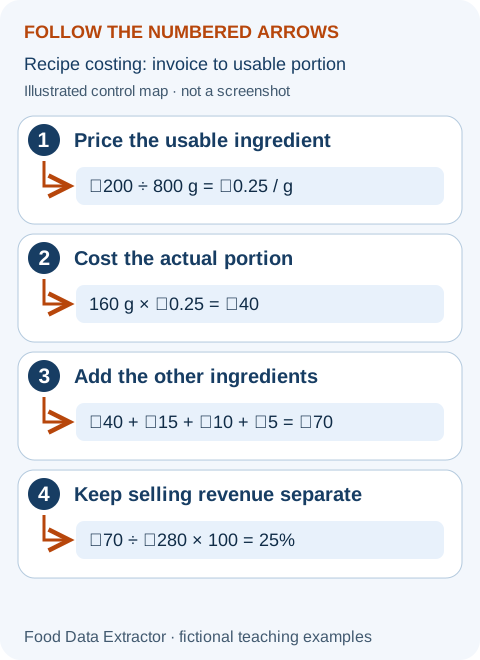
The margin calculator helps estimate the delivery basket after the entered recipe, packaging and platform-related costs. It does not predict brand recognition or future orders. Use the illustrated input manual to keep per-order amounts separate from campaign totals and period overhead. Run each platform using its actual terms rather than changing the platform label alone.
Once orders settle, use the settlement analyser for supported payout records. Keep that cash review separate from the recipe-cost decision. A healthy payout-retained percentage can coexist with expensive food, wasted portions and a poor operating result.
Protect the existing room while learning online
Start the experiment in a service window with measured spare capacity. Compare completed delivery orders, contribution, packing mistakes and preparation time, while also checking dine-in waits and complaints. If delivery creates ₹6,000 contribution but disrupts ₹8,000 of otherwise expected dine-in contribution, its net effect is not a success. Those amounts are an illustrative displacement calculation, not a claim about the platforms.
Keep before-and-after menu versions, opening notes and campaign records. Adopt the change only when quality and the defined contribution objective hold across comparable periods. Do not buy reviews, invent a founding story or label a fictional example as a customer testimonial. The most defensible brand bridge is accurate identity plus a repeatable experience.
The complete beginner tool manual explains controls, units, privacy and access limits. Examples are invented and are not platform rates or restaurant results.
From a familiar local restaurant to a clear delivery offer
A restaurant can be well known on its street and still unfamiliar to somebody browsing an app. The online guest cannot smell the food, see the dining room or ask the server what comes with a dish. They need the listing to explain the same promise in a smaller space. Your job is not to create a louder identity. It is to make the real restaurant recognisable and the delivery offer reliable.
This workshop follows a fictional family restaurant called Banyan Room. It has regular dine-in customers and a recognisable lunch plate. It is not a real case study and the figures below are invented. The aim is to show how an established name can be used honestly while the delivery operation is tested. There is no guarantee that a local reputation will create app traffic, rankings or profitable orders.
Write the promise customers already recognise
Ask staff and regular customers, through appropriate voluntary conversations, what they associate with the restaurant. It might be a particular dish, dependable lunch, a family occasion or a familiar style of service. Record repeated themes without turning a few comments into a formal research claim. Identify which part of the promise can genuinely survive delivery and which depends on the room, table service or immediate eating.
Banyan Room's regulars recognise its lunch plate and clear portion value. The owner therefore starts by describing that plate accurately online, rather than uploading every special served during the past decade. A sizzling dish whose appeal depends on arriving at the table immediately may need a different delivery decision. The team tests product quality and packing within safe procedures before deciding whether it belongs in the launch range.
A local name is useful only when nearby potential customers recognise it or can understand it. Do not assume every app user has visited the street. Add useful cuisine, portion and occasion information in the appropriate fields under the platform's current rules. Avoid inventing awards, history or popularity claims. An honest description of what the customer receives can communicate more than “famous,” “best” or a string of keywords.
Create one identity sheet before editing profiles
Record the genuine customer-facing name, legal operator where relevant, logo asset, approved description, operating contact route and current hours. Keep public identity information separate from private application and account records. The sheet is an internal consistency aid, not a reason to publish identity documents or personal addresses. Update the correct platform fields using authorised access and its applicable listing requirements.
Check spelling and branch identification across the physical sign, owned website and delivery listing. If two branches use distinct genuine identifiers, do not erase them merely to make the names identical. The guest needs to recognise the correct operating location. Where a field asks for a legal entity rather than a brand, use the actual legal record. Marketing consistency does not override the meaning of an official or commercial form.
If an agency manages a profile, retain business ownership and appropriate access. Use supported roles and review them when the relationship changes. Never transfer the owner login or a one-time code to an unverified person promising higher search rankings. Confirm changes after publication so an accidental old description, wrong opening time or duplicated branch does not become the customer's first impression.
Choose the launch range by travel, cost and workload
Review each candidate dish on three questions: can it be supplied honestly after the intended journey, does it provide acceptable contribution on the stated cost basis, and can the kitchen produce it without damaging existing service? Do not reduce the decision to a food-cost percentage. Packaging, preparation, funded incentives and platform-related costs can change the economics of an offline favourite.
Use internal preparation and packing tests rather than unsupported promises about how long a dish will remain safe. Food safety requires the actual trained process and applicable requirements. Commercial travel quality, such as texture or presentation, is a separate test. Record what changed between the dining-room version and the packed version so the online description remains accurate. Do not conceal a materially different product under an unchanged image.
Banyan Room initially chooses six reliable mains and three supporting items. That number is a fictional management choice, not a recommended universal menu size. They choose items using shared ingredients and a manageable production sequence. The owner leaves a popular dining-room dish offline because its delivery trial did not meet the restaurant's quality promise. Excluding it can protect the name more than adding a disappointing version.
Translate the server's explanation into the listing
In the dining room, a server may explain what is included, which side comes with the meal and whether a dish is spicy. Online, those explanations need a clear place in the description or supported choices. Start with the questions staff are asked most often. Use ordinary words and accurate portion information. Avoid a long story that hides the useful contents of the basket below marketing language.
Read the description alongside the photograph. If the photo shows a drink and dessert, say whether they are included or remove the misleading extras. If a sauce is optional, represent that choice clearly through the authorised menu controls. If a dietary claim is made, confirm the restaurant can support it under its actual safety procedures. A friendly tone should not create an unsupported allergen or “free from” promise.
Ask a person unfamiliar with the restaurant to explain what they expect to receive. Their misunderstanding is useful evidence about the listing, not a failure on their part. Then ask the packer to explain the same basket from the order display. The two descriptions should agree. If the kitchen's internal shorthand differs, correct the operational instruction rather than expecting the guest to learn staff terminology.
Make packaging part of the product decision
Packaging is a purchased input, an assembly task and part of the guest experience. Choose it through actual product and safety requirements, not only appearance. Check which containers, bags and seals the basket needs and how they are used. Include the cost once in the relevant worksheet. A shared outer bag should not be charged in full to every item and then presented as an exact per-item fact.
For a fictional basket, a main container costs ₹9, a side cup ₹4 and the allocated bag and sealing material ₹3. Total packaging is ₹16. Across 300 such baskets it is ₹4,800. If the owner originally assumed ₹10 per basket, the worksheet missed ₹1,800. That difference belongs in the restaurant's purchase and usage review, not in a complaint about platform commission.
Test whether the packaging process becomes a peak constraint. A reliable packer may need ingredients or choices from several stations, causing repeated waiting. Observe the sequence and reduce confusion where safely possible. Adding another container can add both cost and work. A photogenic package is not automatically operationally efficient, and commercial savings must not compromise safe handling or the product promise.
Compare the online basket with the dining-room basket
Use the same revenue basis and clearly defined variable-cost scope. Delivery may have packaging and platform-related costs; dine-in may have additional service or payment costs. Keep fixed rent and core payroll separate unless the decision specifically requires an explained allocation. Do not place all shared fixed costs on delivery simply to prove that the new channel is bad, or on dine-in to make delivery look good.
In an original example, a dine-in lunch basket has ₹400 revenue and ₹180 included variable cost, leaving ₹220 contribution. A delivery basket has ₹460 revenue and ₹280 included variable cost, leaving ₹180. Both amounts are before fixed expenses and are not final profit. The higher online price does not automatically mean higher contribution, and the lower delivery contribution does not automatically mean the channel should be rejected.
Ask when the delivery basket uses capacity. During a quiet afternoon it may add useful contribution using an already staffed kitchen. During a full lunch it may displace a guest basket or create delays. Opportunity cost means the contribution given up by using limited capacity for one choice instead of another. It is not a separate deduction shown on the platform statement, but it matters to the owner's decision.
Protect the dining room through a shared service map
Map the dining-room and delivery tasks from order to handover. Identify which station is shared and which tasks are separate. A packed order may not use a seat, but it still uses ingredients, equipment and staff time. Do not interpret free tables as free kitchen capacity. Conversely, a busy dining room does not mean every kitchen station is full; observe the actual constraint rather than guessing.
Banyan Room sees that its flatbread station is the repeated lunchtime bottleneck while rice assembly has spare capacity. Their next test concerns the launch mix and preparation sequence, not a general reduction in all delivery orders. They measure the relevant work and service outcomes. Any preparation or availability changes must follow safe procedures and the current authorised platform controls, without misleading customers about what can be fulfilled.
Keep dine-in wait, delivery preparation, remakes, complaints and unavailable items visible together. A campaign can appear successful in delivery sales while existing guests experience slower service. If the owner only reads the online dashboard, that cost stays hidden. Bring the kitchen lead and front-of-house lead into the review so the established restaurant's reputation is considered alongside the new channel.
Use regular customers as an audience, not a contact list to harvest
If people voluntarily follow your owned social profile, you can explain the delivery offer and provide an authorised link where permitted. Describe the menu accurately and make the destination clear. A link is a convenience for interested people, not permission to scrape contacts or add every diner to a marketing list. Follow applicable privacy rules and platform terms. Consent and respectful communication protect the local trust you are trying to extend.
Keep the message useful: what is available, when, what is included and where the verified ordering link leads. Avoid implying that a platform endorses your restaurant or that an independent export tool is a platform partner. Do not pressure staff, friends or customers to manufacture reviews. Ask neutrally for genuine feedback where the platform's rules permit, without incentives or selective filtering that misleads other readers.
Measure a campaign through completed, understood orders rather than clicks alone. A link can attract visits that do not become baskets. If authorised aggregate reporting is available, keep visit and order definitions separate and respect its limitations. Do not claim you know the identity of every visitor or collect customer-level information unnecessarily. An audience can help discovery, but it does not guarantee profitable demand.
Respond to complaints as operating evidence
A complaint about a missing side, poor description or late preparation points toward a specific process. Read repeated themes without assuming every complaint has the same cause. Use the appropriate private support and customer response routes under the actual platform rules. Do not publish an order screenshot containing a person's details to defend the restaurant publicly. A calm explanation and a verified corrective action are better than an argument.
For a missing-side theme, compare the listing promise, order choices and packing instruction. For a texture complaint, review product suitability and the tested packaging process. For a delay, examine preparation and handover records rather than automatically blaming delivery. Only state facts you can verify. The restaurant may not control every stage, but it can identify its own responsibilities and ask the platform a precise question when needed.
Keep an internal incident reference, date, category, verified cause where known and next action. Do not turn a review average into the entire quality system. A small number of reviews can fluctuate, and ratings differ by platform and context. The useful goal is a better customer experience with honest reporting, not an invented claim that a particular response will produce a fixed rating or ranking increase.
Test one recognisable dish before advertising the whole menu
Choose a dish with a clear promise, measured recipe and manageable preparation. Define the test period, availability, included costs and objective before starting. Record unusual conditions and any changed price or offer. The test should answer a narrow question, such as whether a clarified description reduces confusion or whether a reliable lunch basket attracts useful off-peak demand. It should not try to prove the entire brand's future in one week.
Suppose the fictional lunch basket contributes ₹180 before advertising. Forty test orders produce ₹7,200 contribution. If a campaign costs ₹1,500, the remaining amount on this scope is ₹5,700. That is not automatically incremental profit, because some orders may have happened without advertising and fixed costs remain. Compare a sensible baseline and report the uncertainty. Do not multiply one week's outcome into an annual earnings promise.
Set a stop condition for service problems, cost overruns or a mismatch between description and fulfilment. If the dish repeatedly disappoints, repair it or remove it through authorised controls rather than buying more visibility. A well-known local name can make guests more willing to try, but also makes a disappointing delivery feel like a broken familiar promise. Operational reliability is part of the brand transfer.
Do not confuse catalogue improvement with a ranking formula
A platform may provide a menu-completeness or performance feature. Its stated purpose can help identify missing information, but it does not reveal every ranking factor or guarantee traffic. Swiggy's Menu Score is specific to its published feature. Do not apply that label to Zomato, DoorDash or Uber Eats as if all platforms share it. General principles such as accurate names and reliable availability remain useful without a score.
Keep three views separate: catalogue completeness, customer response and contribution. A fuller catalogue may still include unsuitable items. Higher orders may still leave weak contribution. A better contribution ratio may still produce low total rupees if demand falls. Record the observation that actually changed and choose the next question. A clear process is stronger than chasing a score whose relationship with your business outcome is uncertain.
Our supported extension exports selected Zomato and Swiggy partner records. It does not reveal proprietary ranking formulas, scrape competitor private records or automatically optimise your menu. Use only authorised business data. For DoorDash or Uber Eats export requirements, the support enquiry is a feasibility discussion; those integrations are currently not installed features. An international visitor should not infer universal platform support from the broader website's topics.
Plan expansion with location-specific evidence
A second branch can share a brand but have different demand, costs, staff and preparation constraints. Keep location records separate. Do not copy the first outlet's recipe contribution as proof that the second will earn the same amount. Supplier prices, portion practice, service area, fixed costs and customer mix may change. Check the actual approval and onboarding path for the new premises rather than reusing another location's documents or account details.
Begin with a local observation plan for the new location: available hours, reliable items, service incidents and completed settlement trails. State which elements of the brand promise are shared and which operational facts are new. A recognisable name can support discovery, but it does not remove the need to explain the offer to new guests. Avoid invented testimonials claiming that the branch has already achieved results before evidence exists.
If the restaurant adds another platform, repeat the contract and report checks for that platform. Similar column names do not guarantee identical definitions. Keep fees, funded offers, timing and report formats separate. A main rupee-based calculator does not automatically map an overseas export or contract. Use local-currency manual examples and qualified advice where needed rather than relabelling an Indian platform calculation.
Reader exercise: choose what protects the name
A familiar restaurant has strong dine-in demand but a delivery dish arrives unlike its photograph. Which priority protects the brand: a bigger campaign, a more dramatic image, or correcting the product and listing promise? The useful first action is to investigate product suitability, packaging and the accurate description. Advertising can expose more guests to the same mismatch. A clearer, reliable offer is the stronger foundation.
A dish contributes well online but slows the shared lunch station and causes dining-room complaints. Do not simply compare online sales with last week's total and declare success. Observe the bottleneck, examine displacement and consider a safe operational or availability test. The decision may depend on time of day. The same dish can be useful in a quiet service and unsuitable during a full peak under the current process.
An agency offers guaranteed top placement if the owner shares an account token and buys reviews. Decline the unsafe arrangement and use verified platform and profile management routes. Ranking guarantees do not justify sharing secrets or misleading customers. Maintain business ownership, use supported access roles and preserve honest feedback. Extending a trusted name online should not require practices that undermine the trust behind it.
Separate recognition from a measured conversion claim
A customer saying “I know this restaurant” is useful qualitative information, but it does not establish how many app visitors recognised the name or why they ordered. Qualitative means descriptive observations rather than a complete numeric measurement. Keep that feedback in its proper place. Do not turn a few voluntary conversations into a percentage of the whole market or a claim that the existing name caused every new order.
Where authorised aggregate reports show visits and completed orders, read their definitions carefully. A visit may not mean a unique person, and the period may differ from the sales report. If you divide orders by visits to create a rough conversion measure, explain those limitations. Without a reliable matched denominator, avoid presenting an exact percentage. You can still improve the listing by resolving a verified confusing description or unavailable item.
In a fictional observation, a profile records 500 defined menu visits and 50 matched completed orders. The simple ratio is 10%, provided the definitions and period genuinely match. It is not proof that 450 distinct people rejected the restaurant. Some may have visited repeatedly, ordered later or had a different intent. A clear measure describes its source and uncertainty instead of attaching a dramatic story to every non-order.
Give the front-of-house team a clear explanation
Regular guests may ask whether the delivery listing is the same restaurant or whether the menu differs. Prepare an honest answer. Explain which dishes are offered for delivery, how the verified ordering link works and why some dining-room items are not suitable for the launch range. Staff should not promise a platform promotion, delivery time or discount that the restaurant cannot confirm through the actual current offer.
If a guest asks about a missing online dish, explain the operational choice without disparaging the platform or inventing a legal reason. The team might say that the restaurant is testing a smaller range to preserve quality. That is more truthful than claiming the item will never be available or that every familiar dish travels equally well. Keep the answer aligned with the actual owner decision and menu version.
Review the questions staff hear and use repeated themes to improve the public explanation. Do not collect names or contact details merely to count a question. A short anonymous category tally may be enough for the operational purpose. The restaurant's long-standing hospitality can help make the online offer understandable, but it should not become pressure to buy, join a marketing list or leave a favourable review.
Pause expansion when the promise is not stable
If the launch range still has recurring unavailable items or inconsistent portions, expanding catalogue size may create more confusion. Stabilise the repeated issue first. This does not mean waiting for perfection; it means choosing the change with the clearest operational value. An established name deserves a delivery experience the team can reliably explain and fulfil, not a hurried copy of every dish that has ever appeared on the dining-room menu.
Keep a simple brand-transfer review
Once a week, review identity accuracy, live menu promise, availability, product and packing incidents, channel contribution and effects on dine-in service. Pick one next action with an owner and date. Keep customer and staff personal information out of the general summary. Save the genuine source records privately and explain any correction. An established business needs a repeatable operating habit, not a second marketing identity that nobody can maintain.
Make the summary readable by a new manager: “This item was unavailable for three lunches; kitchen lead changes the stock signal and reviews cancellations next week.” Avoid “optimise omnichannel engagement” when the actual task is to keep a side in stock and the listing accurate. Plain language makes a promise easier to carry from the guest's screen to the kitchen and back into the review.
Use the channel comparison when capacity and contribution need a fuller model. Use the launch checklist for the separate readiness tasks and the weekly review for stock and operations. Return to this workshop when the question is whether the online offer faithfully carries the real restaurant's name and promise.
Banyan Room and all added amounts are fictional examples. The advice is a decision method, not proof of platform ranking effects, customer growth, safe travel times or approval. Official sources elsewhere in the guide support their own stated features and requirements; confirm current terms and use trained professional help for safety, tax and legal questions.