
AUSTRALIA · FIND THE LOCAL ROUTE FIRST
Starting an Australian food business: notification, licences and the council questions to ask
A search for “food licence Australia” can send you to a page for the wrong state or council. Before collecting documents, find out who regulates your actual place and activity. Notification, registration, a food licence and property permission are different tasks. This guide helps you sort them, ask useful questions and avoid spending money on a kitchen before the important uncertainties are understood.
Choose a section in this guide
What is national, and what must be checked locally?
Food Standards Australia New Zealand says a new food business must tell its local food regulatory agency about the business. Its guidance includes home, online, mobile and temporary operations and changes to the name, location or activities. That notification starting point does not replace a licence or registration required under the actual state and council route. FSANZ means Food Standards Australia New Zealand; it is not the name of a universal restaurant application portal.
In Queensland, the published state guide directs food-business licensing to local councils and explains that the council assesses the relevant case. In New South Wales, the Food Authority distinguishes licensing from notification, with the responsible destination depending on the activity. Victoria's official starting material directs businesses toward council registration or notification and the appropriate classification. These are different routes, not alternative buttons for the same national form.
Start with the regulator for your state or territory and the council responsible for the operating place. Ask what applies to the actual work and location. A business-number registration, a landlord's agreement or a delivery-app listing does not settle the food-business route. Do not copy a Brisbane fee, Victorian classification or NSW application into a different jurisdiction merely because the business is also called a café.
Checked 12 October 2026: FSANZ's national starting guidance, Queensland's licence route, NSW licensing and notification, and Safe Food Victoria. Confirm current local requirements; this guide does not classify your business.
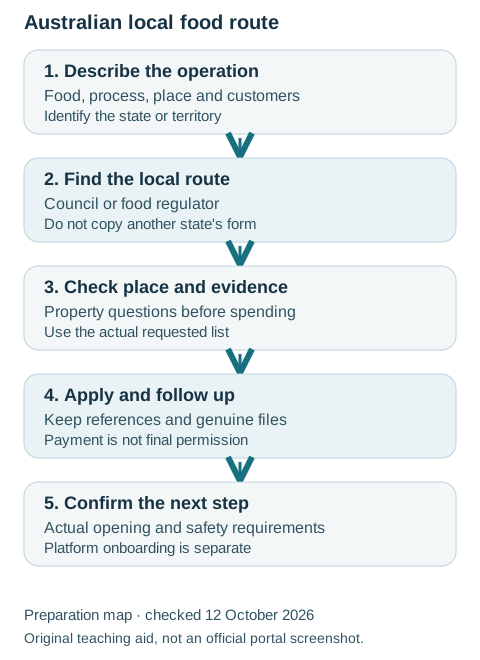
Step one: describe the food, place and customer
Write what you will actually do rather than only the business name. Explain the food prepared or handled, the preparation and storage place, the operator and how customers receive it. Include whether you sell directly, supply other businesses, use a vehicle or work at temporary events. The regulator needs the real activity. “Small food startup” can describe many operations with different requirements.
We will follow a fictional café project called Shore Counter. Its owner plans to prepare lunch at one rented site, serve customers there and offer collection and delivery. The owner records those activities before choosing forms. A second fictional business makes products for sale through retailers, so it seeks advice about its different supply arrangement. Neither story decides the legal category for a reader's actual operation.
List activities planned for later separately. If event catering or another branch is only an idea, say so. Before committing to the new activity, ask whether the current route changes. A future plan should not be hidden from a relevant question, but it should also not be represented as an existing authorised operation. Clear timing helps the regulator and owner distinguish the first launch from later growth.
Step two: identify the actual state, council and regulator
Put the state or territory and operating location at the top of your tracker. Use official sources to identify the responsible authority. A consultant's location does not decide which council regulates your kitchen. A mobile unit or multi-site operation may have specific questions about where it is based, stored and used. Do not infer the route from whichever search result has the shortest online form.
Keep a verified contact and the date of advice. Ask a specific question with the actual description: “We intend to prepare these meals at this type of place and sell them in these ways; which notification or licensing route should we use?” This is more useful than asking for the cheapest licence. If another authority is responsible for part of the activity, record the referral and its scope.
Check the official destination before entering business or identity information. Private services can offer optional assistance, but should not be mistaken for a regulator. Never share account secrets with someone promising guaranteed approval. If a helper prepares an application, ensure the operator understands the submitted information and retains the genuine references and an appropriate handover.
Queensland example: ask the council about the real licence case
Use Queensland's current food-business licensing guidance as the state starting point, then ask the actual council about whether the operation needs a licence, what exemptions may apply, the application and current fees. The published state material identifies premises design, relevant skills and food-safety arrangements among assessment considerations. It does not provide one fixed fee or one document pack for every business in every Queensland council.
Shore Counter's owner uses a private question sheet rather than treating this article as a council form. The sheet distinguishes the food route, premises questions and staff preparation. When the council asks for information, the owner follows that actual request. A file labelled “generic Australian café documents” may contain irrelevant items while omitting the detail the council needs for the proposed operation.
If the owner wants to take over a previous operation, the current operator and proposed changes still need checking. Old paperwork is context, not proof that the new owner may simply reuse every approval. Ask what transfer, new application or notification process applies to the actual case. Do not edit an old licence image to display the buyer's name and present it as official.
New South Wales example: notification and licensing are not interchangeable
The NSW Food Authority's published route separates businesses that need its licence from those that notify the relevant council or Authority. Retail food businesses are generally overseen by their council, while other activities can involve the Food Authority. Use the official activity guidance and ask when uncertain. Do not assume that a home business or wholesale supplier has exactly the same destination as an ordinary retail café.
For a fictional home-food project, the owner describes both direct customer sales and proposed supply to another shop. The recipient matters to the routing question, so the owner does not leave it out to obtain a simpler-looking answer. They ask the authority where the actual operation belongs before using another person's notification template. The example is not a determination that the home or product is suitable.
Keep any state notification, council application and property discussion distinct. If one process also collects information for another requirement, confirm that through the actual authority rather than submitting duplicates from several guides. A notification receipt can be useful evidence, but cannot be stretched into a claim that every other permission or safe-operating question has been answered.
Victoria example: classification follows the actual food activity
Victoria uses food-premises classifications and council registration or notification arrangements. A classification is the category used for the relevant regulatory requirements, not a quality score or a choice made because its fee appears lower. Use current Safe Food Victoria information and ask the registering council to confirm the actual class and process. Changes to the system make old downloaded checklists particularly risky.
A café preparing meals and a stall selling a different product can have different activities even if both serve customers at a counter. The owner should explain what happens, the food involved and who receives it. Do not select a category from the trading name alone. A dietary or allergen-related claim can also be relevant to the actual controls; it should never be treated as harmless marketing language.
For mobile or temporary trading, ask about the current local process and any requirement for the actual event or place. Do not copy an old portal name or assume a statewide record settles every event question. This guide links the current official entry point instead of reproducing a historical screen. The right answer must come from the actual activity and authority.
Step three: investigate the property before buying the fit-out
A suitable-looking vacant shop can still leave unresolved questions about the intended food use and physical work. Ask the council and appropriate qualified advisers what needs checking. Planning, building, food-business licensing, signage and alcohol can be distinct matters where relevant. This list is a prompt to investigate, not a statement that every café requires every type of application.
Brisbane City Council's restaurant and café guidance is a useful local example because it starts with the property and possible planning or building questions, alongside food licensing and other matters. Its advice is Brisbane-specific. It cannot establish the process in Sydney, Melbourne or another Queensland council. Use the actual jurisdiction's current material and obtain a case-specific answer before a major commitment.
Shore Counter's owner pauses a kitchen-equipment order until the important property questions are understood. The owner asks what information is needed about the proposed use and work rather than assuming a sales brochure is enough. A landlord may answer lease questions, but cannot replace the regulator or qualified specialist for every issue. Keep each answer attached to its proper source.
Brisbane City Council: opening a restaurant or café. This is a local example, not a national fit-out checklist.
Make the operating layout understandable when it is requested
If the actual authority requests a layout or design information, follow its current requirements. Do not invent a mandatory scale or format from this article. A useful preparation discussion identifies the food flow, storage, equipment and relevant facilities in the actual place, with qualified help where necessary. A decorative floor plan can look attractive while failing to explain how the operation will work.
Keep the version linked to the proposed operation. If an equipment location or activity changes during review, record what changed and check whether revised information is needed. Do not send several conflicting drawings without explaining which one is current. Mark a private planning sketch as a sketch so it is not confused with a professional or approved document.
A plan accepted for one part of a process is not automatically permission to start trading. Read what the actual message says and which stages remain. The owner should be able to distinguish design discussion, application review, inspection and issued permission where applicable. This prevents a positive intermediate message from being treated as the end of every opening task.
Step four: build a tracker from the actual request
List the information and documents requested by the actual authority. Add the genuine source, person responsible, version and reviewed status. Use three clear labels: requested, not requested and awaiting clarification. Do not label every item mentioned on a general website mandatory. The local application, activity and current instructions determine the pack needed for the case.
Open every file before marking it ready. Check the correct operator and place, all required pages and readable text. Follow current format and size instructions. If compression is needed, inspect the compressed version rather than assume the original remains readable. A file that opens as a tiny thumbnail may still be too blurred to review. Do not alter genuine content to make the evidence agree with a mistaken answer.
Appoint one final reviewer. Several people may gather information, but one person should compare the form and file pack before submission. Keep a genuine copy of what was sent in the business's approved private storage. If a query later mentions an uploaded item, that copy helps identify the actual version instead of relying on a message attachment that was never submitted.
Separate operator, brand and place names
The customer-facing name is not always the legal operator's name. Read the field meaning before copying a brand across the form. A business-number record, company record and operating address can answer different questions. The food route still needs the actual operator and activity. A marketing logo does not repair inconsistent legal or contact information.
Shore Counter is a fictional brand used by a separately named operator. The owner builds a private name map with a genuine source beside each answer. If records disagree, the owner seeks a legitimate correction or clarification. They do not edit an identity file in an image editor. The tracker records the unresolved point so another reviewer can see it before submission.
For several locations, keep place records separate. Avoid sending one site's lease or plan in another site's application merely because the brand is shared. A cross-location file mix-up can be difficult to spot when every filename just says “café document.” Use a clear internal location reference and version without exposing unnecessary personal details in filenames.
Step five: use the current official process
Follow the actual authority's live form and field explanations. This article does not invent a “Submit Australia Licence” button or reproduce an authenticated portal we have not tested. Council systems differ and can change. If a question does not fit the operation, ask the authority rather than selecting an inaccurate answer simply to move to the next screen.
Before submission, check the operator, contact, operating place, activity and start plan against genuine records. Read declarations carefully. Save the reference, payment evidence where applicable and the information actually submitted. A payment can be one stage without being final approval. Do not present a successful card debit as proof that the operation has met every opening requirement.
If payment or submission status is unclear, use verified support before repeated attempts. Keep the reference, time and actual error message. Do not send card details or one-time codes to an unsolicited person offering to release a stalled application. A calm record of the attempt is more useful than several duplicate applications created under different contacts.
Step six: answer a query with the information it asks for
Record the message, the issue, owner of the response and the actual deadline stated. A request for a clearer layout, a corrected operator or additional activity information needs a targeted answer. Uploading unrelated documents may not resolve it. Do not assume every council has the same response period or that a generic tutorial's timing applies to your case.
Use a response table with the requested item, genuine evidence and submission confirmation. If a question is unclear, ask for clarification through the verified route while keeping any actual deadline visible. A draft saved on your device is not necessarily a response received by the authority. Follow the current instructions and check the resulting status or acknowledgement.
Keep corrections visible. If a genuine address detail changes, record the source and follow the authority's update process. Do not manually edit an issued record and call it corrected. If an application must be replaced or another route is needed, confirm that with the authority rather than guessing. The business needs a truthful trail that can be handed to the next responsible person.
Step seven: prepare the real food-safety work
Use the applicable food-safety standards, local guidance and qualified training for the actual operation. Ask which supervision, training, records and other arrangements apply. This article does not decide that every café has the same training requirement or establish safe temperatures and storage life. Financial forecasts do not override food safety. A planned busy opening needs a routine staff can actually follow.
Have the team explain receiving, storage, preparation, cleaning, unexpected problems and escalation in plain language. If the plan mentions equipment the kitchen does not have or a task nobody owns, repair the plan and real practice together. A downloaded template is useful only when the applicable process allows it and the actual operation understands how to follow it.
Record genuine observations and corrective actions as required. Do not create historical readings that were never taken to make a folder appear complete. If a check was missed, seek the appropriate safe response and improve the process. A checkbox on this page cannot determine whether food is safe or predict the result of an official inspection.
Keep the menu promise linked to ingredients and training
Before launch, make the recipe, customer description and internal preparation instruction agree. A supplier substitution can change ingredients even when the dish name stays the same. Keep the product information needed by the actual safe system and update relevant customer information appropriately. Do not let an attractive menu claim outrun the controls the kitchen can support.
Words such as vegan, gluten-free or allergen-free require care. A recipe without one ingredient does not automatically remove cross-contact risks or settle applicable labelling rules. Ask trained and official sources about the actual product and claim. This guide does not certify dietary suitability. When staff are uncertain about a request, they should know the appropriate honest escalation route.
Delivery adds packing and handover questions without eliminating the kitchen's duties. Test the real product and packaging using safe procedures, not invented travel-life promises. A platform image and description should match what can be supplied. Commercial product quality and food safety are related but distinct; good appearance is not evidence that a process is safe.
Practical scenarios: different operations need different questions
A Brisbane café in a former retail shop
The fictional owner does not assume the old shop's commercial status settles the proposed food use. They start with Brisbane's current property and food-business routes and obtain the appropriate case-specific information. Equipment is quoted but not treated as an approved fit-out. They keep unresolved planning or design questions visible before a large deposit is paid.
When the owner receives a helpful design response, they read its actual scope. They do not rename it “permission to open.” The private tracker identifies the remaining food and property stages and their genuine evidence. This protects the project from an opening date based on an intermediate message rather than the requirements that apply.
A NSW home-food seller adding wholesale supply
The owner describes both direct customer sales and the proposed supply to another business. They ask the NSW Food Authority or appropriate council about the actual route. The home setting does not make the supply arrangement irrelevant. A friend's retail notification is not proof that the proposed wholesale activity belongs in the same place.
The owner separates home-use questions, food regulation and the buyer's commercial requirements. They do not promise a first delivery until the important questions are resolved. This example does not establish the suitability of a home or product; it teaches why honest activity descriptions and verified routing matter.
A Victorian temporary stall
The seller checks current Victorian and council arrangements for the actual activity and event. They do not choose a lower class because it sounds cheaper or copy an old event portal tutorial. The relevant authority should confirm the category and process. The seller keeps food preparation, transport and event-site questions connected without assuming one record settles all of them.
The private task list identifies who obtains the current requirements, who handles genuine records and who prepares staff. If the event organiser provides a checklist, the seller checks its scope against the regulatory route rather than treating commercial event acceptance as every required permission. Any deadline in the calendar comes from the actual organiser or authority, not this fictional story.
A mobile operation working across areas
The operator explains where the vehicle is based, stored and used and asks how the actual sites affect notification, licensing or other requirements. They do not assume an approval in one area is automatically valid everywhere. The current authority's answer belongs in the tracker with its date and scope. A national web article cannot determine the route for every vehicle and stop.
Keep each planned trading location and the relevant contact clear. A change in activity or site should trigger a new check where appropriate. Avoid duplicating forms blindly, but also avoid skipping a local requirement because the business already has a number somewhere else. The useful skill is knowing which question to ask, not memorising an unsupported universal answer.
Plan costs using real quotes, not a copied fee
Build the budget after the route is understood. Separate actual regulatory fees, professional help, property work, equipment, training, stock and contingency. Ask what a quote includes and whether tax or later stages are separate. There is no fee in this article labelled “the Australian food licence cost,” because jurisdiction and activity matter. A consultant's charge is not automatically an official fee.
For an original fictional AUD exercise, equipment is AUD 2,400, a stated professional service AUD 350, initial stock AUD 500 and contingency AUD 450. The subtotal is AUD 3,700, before any actual regulatory or premises costs not yet established. A AUD 600 equipment deposit is already part of the AUD 2,400 quote. Adding it again would inflate this subtotal to AUD 4,300. These are teaching amounts, not market prices.
Show payments by date as well as the total. A quote payable in stages can create an early cash commitment even if the final project cost is manageable. Keep a delay case for uncertain opening or receipts. Do not pay for an unresolved fit-out with a guessed platform sales forecast. A licence or notification does not guarantee customer demand or profitable contribution.
Know which cost changes if the plan changes
If a project is delayed, some commitments may remain while others can be postponed or cancelled under their actual terms. Do not call the entire budget refundable without reading the agreements. A deposit, professional service and stock purchase can have different arrangements. Ask the relevant provider and adviser rather than assuming a general business guide establishes your recovery rights.
Keep the “not committed yet” list visible. It gives the owner choices while official or property questions remain unresolved. The budget should help decide the next safe commitment, not create pressure to open prematurely because money has already been spent. Sunk cost means money already committed that may not be recoverable; it should not justify ignoring the requirements that still apply.
Confirm what allows the actual operation to start
Read each official outcome and its conditions. An application lodged, payment made, design reviewed and permission issued can be different stages. Ask the authority what is required before the actual activity begins. Do not invent a universal “wait until inspected” or “start immediately” rule for all Australian food businesses. The right answer depends on the relevant route and case.
Compare genuine records with the operator, place and activity. If a condition or detail is unclear, ask before treating the file as complete. Do not edit an issued record yourself to change a name or address. Keep the actual update process and any official corrected version. The tracker should show both the original event and the genuine correction so the trail remains readable.
Separate the financial opening decision from legal readiness. Even after the regulatory tasks are confirmed, the owner still needs stock, staff, safe routines and a clear menu. Conversely, a fully stocked kitchen does not establish the regulatory position. A practical launch plan brings these tasks together while respecting their different sources and limitations.
Delivery platforms are a separate business project
Uber Eats, DoorDash and other delivery platforms have their own current account and commercial processes. Use authorised onboarding and reports. Platform acceptance is not a national food licence, and a food-business record does not promise a platform listing. Keep government, property, safety and platform tasks in separate rows with genuine evidence.
For pricing, calculate local-currency contribution using the actual revenue basis, ingredients, packaging and relevant services or funded offers. A bank payout can include refunds, fees and old adjustments; it is not final profit. Do not use a universal fee from a US tutorial or assume every report button exists in the Australian account. Check regional documentation and actual contracts.
Our main analyser supports specified Zomato and Swiggy export formats, not an automatic Australian DoorDash or Uber Eats import. The main calculator is rupee-based and does not decide local tax or licences. Use the Australian reporting guide where available in the library, and contact support about a future extractor requirement without sending credentials or identity documents.
When the application goes wrong: keep the question specific
I used the wrong council
Explain the actual place and activity through a verified official contact and ask where the case should go. Retain any existing reference. Do not assume the solution is another payment or a duplicate application without advice. Make the referral visible in the tracker so a colleague does not continue sending documents to the old destination.
A requested plan is unclear
Ask which information and current format the authority needs. Describe what you have and where it does not meet the request. Obtain qualified help for specialist work rather than guessing a scale or copying another premises. Keep versions clear. A corrected drawing should be genuine and connected to the actual proposal.
The file was submitted but I cannot see a result
Check the official reference and actual status. A pending case is not automatically rejected or approved. Use verified support with the date and relevant information. Do not claim a guaranteed completion time from another applicant's experience. Keep any response and follow-up task so the uncertainty is managed rather than silently ignored.
An agent promises instant approval
Ask what service is being offered, who actually decides the application and which fee is official. Independently verify the regulatory route. Do not share account secrets or pay a personal account under pressure without checking. Assistance can be useful when honest and competent, but cannot replace the authority's decision.
Keep a usable handover and review changes
The owner should be able to explain the operator, location, route, submitted references and unresolved questions without the original helper present. Keep sensitive files in approved private storage with appropriate access. A general staff handover does not need everybody's identity or pay information. Give each person the records and responsibilities relevant to their role.
When the name, place, activity or operator changes, check the appropriate official update process. FSANZ's starting guidance specifically calls attention to changes; local licensing or registration requirements also need their own review. Do not assume a second site or new wholesale line is covered because the original café has a record. Record the question and the genuine answer before committing.
Update public hours and menu promises too. A properly described operation can still disappoint guests when a platform shows old availability. Use the general launch checklist as an operating method, not Indian legal instructions for Australia. The lessons about clear roles and cost definitions travel; the authority, fees and forms must remain local.
Try a simple activity tracker before you ask for advice
Take a blank sheet and write five columns: food or product, what you do to it, where the work happens, who receives it and what is still uncertain. This is your own preparation sheet, not a mandatory national document. Its purpose is to make the conversation concrete. A regulator can give a more relevant answer when the activity is described than when the owner says only “I want a food licence.”
In Shore Counter's fictional tracker, one row describes meals prepared at the rented café and sold directly to customers. Another describes the proposed collection orders. A third is marked future and describes products potentially supplied to another shop. That third row is not silently merged into the first. The owner can ask how the future activity changes the route before signing a supply agreement.
Add the operating location to every row where it differs. If some preparation happens elsewhere, do not conceal it because the main address looks simpler. Describe the real supply and storage arrangement. The correct authority can then advise which parts need attention. This sheet does not decide whether a shared kitchen, home space or vehicle is acceptable; it prevents those questions from being lost.
Check three misleading shortcuts
The first shortcut is “another café uses this class, so I should too.” A name is not a complete activity description. The actual food, process and jurisdiction matter. Ask the responsible council or regulator to confirm the route rather than treating a competitor's public record as your own classification. Similarity can identify a question to ask, but is not a determination.
The second shortcut is “the landlord said restaurants are allowed.” That may be useful lease context, but the owner still needs to understand the actual property and regulatory position. Ask who issued the relevant information and what it covers. A statement about one use or an earlier tenant may not settle a changed layout or activity. Obtain appropriate qualified and official answers before major work.
The third shortcut is “the app accepted my menu, so I can begin.” Platform onboarding is a commercial process with its own scope. It does not settle all food, premises or safety obligations. Keep the launch date connected to the actual confirmed opening requirements. The checklist's progress and an attractive profile should not pressure the team into treating unresolved tasks as complete.
Use plain questions when advice conflicts
If two helpers give different answers, write the exact activity and the conflicting point, then seek clarification from the responsible official source. Ask whether the advice concerns notification, a food licence, classification, property use or another permission. Sometimes the answers do not actually conflict; they address different tasks. Identifying the subject is more useful than choosing the answer that sounds cheaper.
Retain the genuine response and date. A general article, a regulator's response to your actual case and an old tutorial have different evidential weight. Do not describe a current case-specific answer as a permanent nationwide rule. A clear private note says what was asked, what was answered and what changed later. This helps a new manager avoid repeating the same uncertain argument.
After the route is confirmed, translate it into the next practical task and owner. “Get the actual requested plan prepared by an appropriate person” is clearer than “sort compliance.” A first-time owner can make progress without knowing every legal term, provided the activity is honest, the source is appropriate and the next step is specific. That is the role of this guide, not replacing the regulator.
Interactive local-route checklist
This is an unsaved preparation checklist, not a licence application or approval result.
Quick questions without complicated language
Is there one licence I can buy for all of Australia?
Do not use that assumption. The state or territory, activity and local arrangements matter. Find the responsible regulator and council for the actual operation and ask about the current route. A private package marketed nationally is not evidence of one universal government permission.
Does a home kitchen avoid these questions?
No automatic conclusion follows from the home setting. Describe the actual food activity, sale and place and use the correct official route. Home-use, insurance and other relevant questions remain separate. This article does not decide that a particular home or product is suitable.
Should I copy a neighbour's documents?
You can learn how they organised their work, but not assume their requirements apply. Activities, operators, places and current rules can differ. Use genuine records and your actual authority's request. Do not upload their personal information or substitute their approval for your own case.
Can this checklist guarantee approval?
No. It makes the next task clearer and helps avoid inconsistent evidence. It does not classify the business, inspect the premises or submit an application. Only the relevant official process can establish the actual outcome, and safe operation still needs real ongoing work.
Official references and review limits
- FSANZ: starting or changing a food business — updated 30 September 2025; national notification starting point.
- Queensland: apply for a food-business licence — council route; confirm current local fees and exemptions.
- Brisbane: opening a restaurant or café — local property and opening example.
- NSW Food Authority: licensing and notifying — activity-dependent destination.
- NSW home-based and mixed businesses — check direct sale versus supply arrangements.
- Safe Food Victoria and classification guidance — current state entry points.
Reviewed 12 October 2026. No authenticated council application, premises inspection or official eligibility decision was performed. Pages from older research may redirect to updated services; follow the current official destination. Examples explain preparation, not legal entitlement, mandatory documents, universal fees or guaranteed timelines.